What do impact investors mean when they use the word Blended Finance? Why would an investment firm want to use different approaches and vehicles and strategies instead of specialize?
Response from sonar-pro:
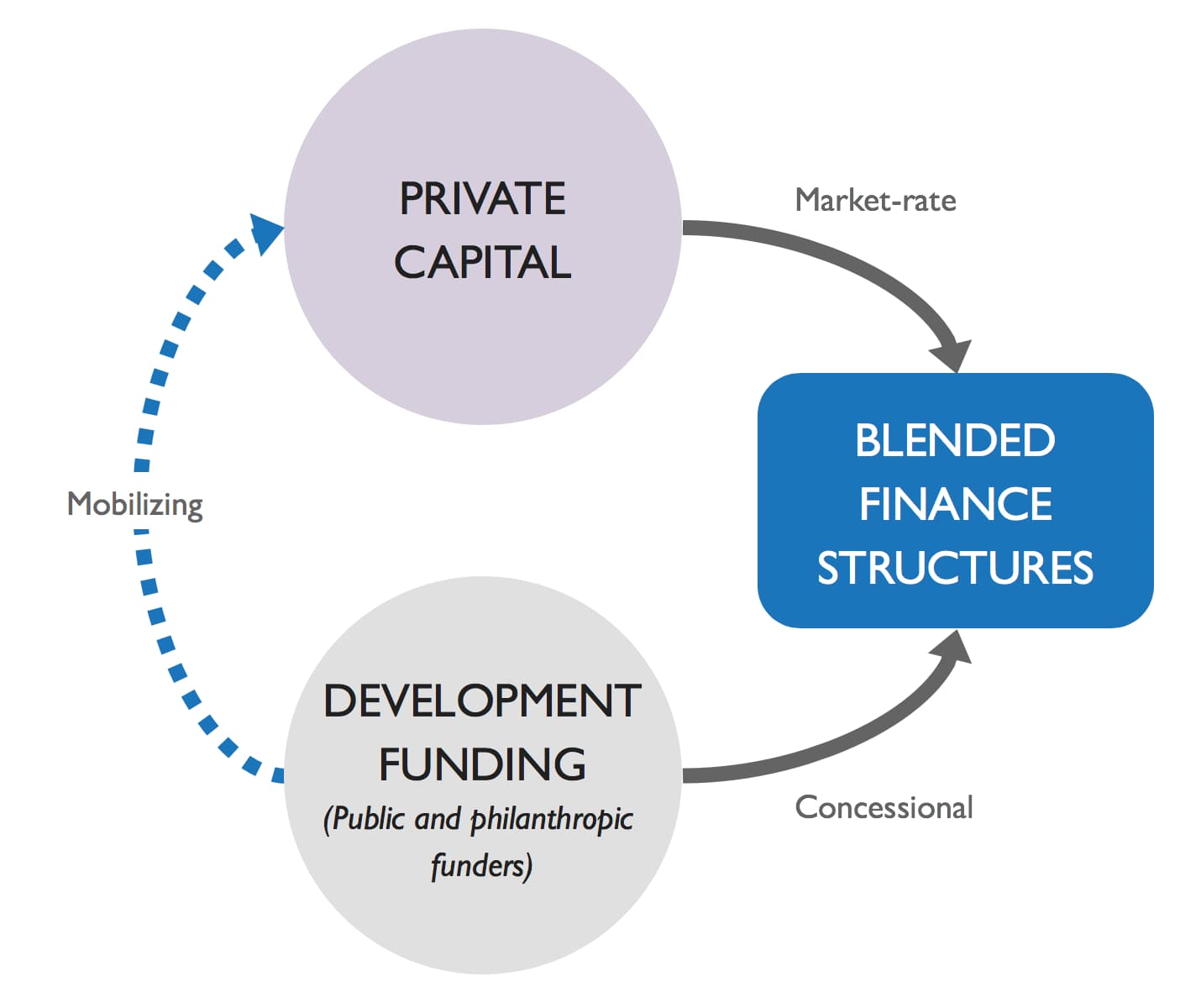
Blended finance refers to the structuring of investments that combine capital from different sources with varying risk-return profiles—primarily philanthropic, public, or concessional (“catalytic”) capital alongside private, commercial capital—to make investments in projects that deliver social and environmental impact while also providing financial returns.
[1]
[2]
[3]
[4]
The main goal is to use public or philanthropic resources to attract larger pools of private sector capital to areas that typically struggle to secure commercial investment on their own, such as in developing economies or high-impact sectors.
[2]
[3]
[4]
A typical blended finance diagram illustrates layers of investment: the base layer might come from a foundation or development finance institution willing to accept higher risk or below-market returns, while additional layers come from commercial investors who are attracted because their risk is reduced and/or their returns are protected due to that base layer.
Key Concepts & Mechanisms in Blended Finance
Risk absorption and catalytic capital: Philanthropic or public ‘ Catalytic First Loss Capital ’ or guarantee layers protect more risk-averse private investors, making investments more attractive by lowering the overall risk or increasing the expected return for commercial participants.
[1]
[2]
[3]
[4]
Multiple objectives: Each participating investor targets their own priorities—some maximize impact, others prioritize financial returns—but they invest together in a single structure.
[1]
[2]
[4]
Leverages and multiplies funding: By de-risking, blended finance can mobilize much more commercial capital "on top" of the original concessional funds, enabling larger projects and greater impact.
[5]
[3]
For instance, a blended finance fund might use philanthropic money to provide loan guarantees in a renewable energy project in Sub-Saharan Africa, allowing commercial banks to participate with less risk exposure.
Why Don't Investment Firms Specialize in Just One Approach?
Investment firms often use multiple approaches, vehicles, and blended strategies rather than specializing in a single investment structure because:
Addressing diverse needs: Social/environmental projects are often high-risk or unproven commercially; using multiple strategies allows firms to tailor solutions to specific projects and investor preferences.
[1]
[2]
[3]
[4]
Expanding investor pool: Blended finance opens the door for a variety of investors, including those who would not invest if only standard market or purely philanthropic terms were offered.
[1]
[5]
[4]
Risk optimization: Using a combination of tools (such as guarantees, subordinated debt, or grants) helps manage risks more finely, enabling the pursuit of impact across a wider spectrum of opportunities and geographies.
[5]
[3]
Flexibility and innovation: Impact markets are evolving; multi-strategy approaches allow investors to adapt quickly to market gaps and opportunities, learning and iterating as they go.
[2]
[3]
A visualization might display a portfolio of investments, showing some projects supported via grants, others via concessional loans, and still others structured as loans with first-loss guarantees—in one portfolio, serving different investor appetites and project needs.
In summary:Blended finance is about structuring diverse capital sources to overcome risk-and-return barriers, thus attracting private capital to impactful projects that would otherwise be overlooked.
[1]
[2]
[5]
[3]
[4]
Using a mix of strategies and vehicles gives investment firms the agility to mobilize and maximize both financial and social/environmental returns across a wider range of opportunities.



 For instance, a blended finance fund might use philanthropic money to provide loan guarantees in a renewable energy project in Sub-Saharan Africa, allowing commercial banks to participate with less risk exposure.
 A visualization might display a portfolio of investments, showing some projects supported via grants, others via concessional loans, and still others structured as loans with first-loss guarantees—in one portfolio, serving different investor appetites and project needs.