Data Notebooks
(2026-05-09T09:29.090Z)
Perplexity Query
(2026-05-09T09:29
.090Z)
Question:
Write a comprehensive one-page article about "Data Notebooks like Jupyter, Observable, Marimo".
Model: sonar-pro
Data Notebooks: Jupyter, Observable, Marimo, and the Evolution of Interactive Computing
Introduction
Data notebooks are interactive computing environments that blend code, visualizations, and narrative text in a single document, revolutionizing how data scientists, analysts, and developers explore data and build applications.
[3wpopn]
[d5zrzg]
Tools like Jupyter, Observable, and Marimo have made iterative experimentation accessible, turning complex analyses into shareable stories. Their significance lies in democratizing data work, enabling rapid prototyping and collaboration in fields from AI to business intelligence.
Explainer
At their core, data notebooks function as enhanced REPLs (Read-Eval-Print Loops), allowing users to execute code snippets—called cells—in any order while preserving state. Jupyter Notebooks, the pioneer since 2014, support Python, R, and more, excelling in exploratory data analysis (EDA). For instance, a data scientist might load a dataset with
pandas, visualize trends via matplotlib, and annotate insights inline—ideal for machine learning workflows like training models on Kaggle competitions.
[3wpopn]
Observable takes a different tack with its JavaScript-based, reactive paradigm inspired by dataflow programming. Unlike Jupyter's manual cell re-execution, Observable automatically updates dependent cells when inputs change, creating live, interactive dashboards. A practical example: building a real-time stock ticker where users filter data via sliders, and charts refresh instantly—perfect for web apps or teaching interactive statistics.
[q74ke4]
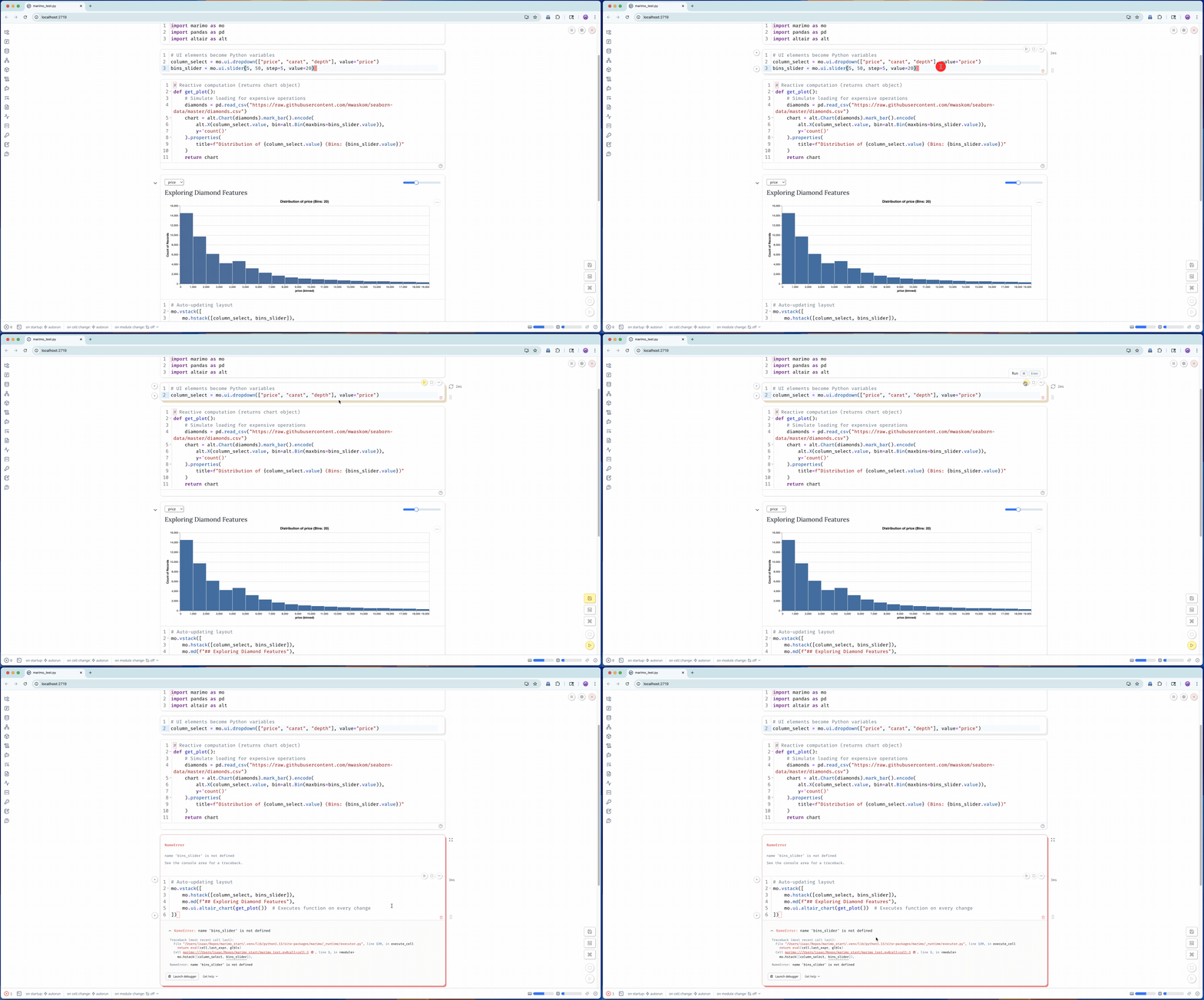
Marimo, a newer Python-focused entrant, represents notebooks as dataflow graphs, blending reactivity with reproducibility.
[y8l6xc]
[d5zrzg]
Edit a variable, and Marimo propagates changes automatically, eliminating Jupyter's "execution order hell." Notebooks save as plain
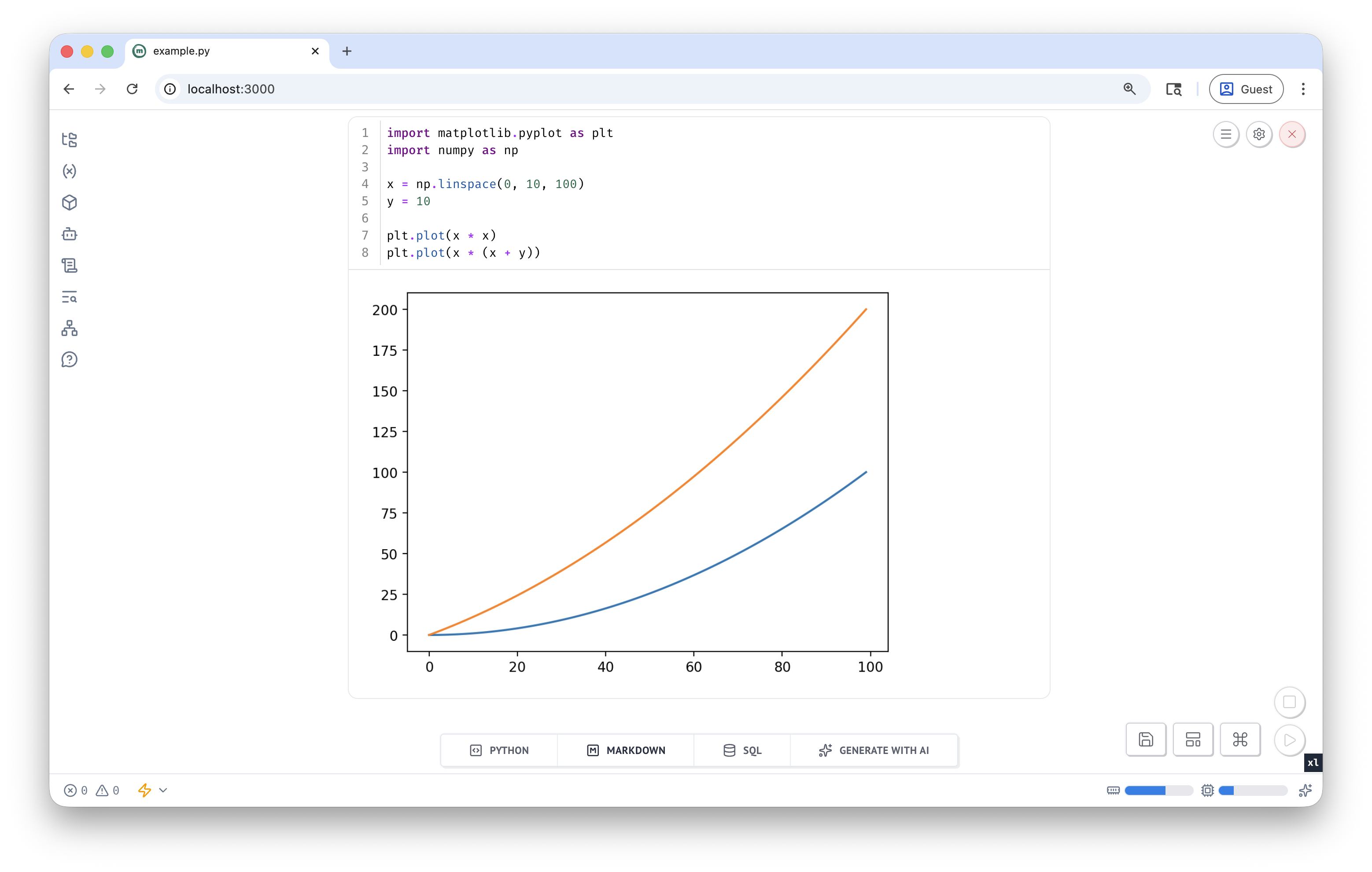
.py files, making them Git-friendly scripts or deployable web apps. Use cases include collaborative EDA—share a Marimo file, and teammates run it consistently without environment hassles—or converting analyses into stakeholder-facing apps, like SQL-powered dashboards for sales forecasting.
[3wpopn]
[y8l6xc]
Benefits abound: reactivity speeds iteration, reproducibility aids sharing, and deployment simplifies apps. Challenges include Jupyter's state inconsistencies across sessions and dependency management; Marimo mitigates these via self-contained execution.
[3wpopn]
For teams, version control is smoother with Marimo's Python purity versus Jupyter's JSON format.
Current State and Trends
Jupyter dominates with millions of users, powering platforms like Google Colab and VS Code extensions, but pain points like non-deterministic runs drive alternatives.
[3wpopn]
Observable thrives in JavaScript/web viz communities, especially for Observable Plot users building dynamic tools.
[q74ke4]
Marimo, open-source and gaining traction since its 2023 launch, emphasizes Python-first reactivity, with growing adoption for its app conversion and SQL/LLM support.
[d5zrzg]
[wen41t]
Recent developments include Marimo's dataflow graphs enabling "AI-native" features, like real-time UI-to-Python feedback, positioning it as a Jupyter successor for data apps.
[y8l6xc]
[wen41t]
Adoption surges in enterprises seeking reproducible ML pipelines.

Future Outlook
Looking ahead, data notebooks will likely converge on reactive, multi-language dataflows with deeper AI integration—think auto-generated cells via LLMs and seamless deployment to cloud services. Marimo-like tools could standardize reproducible apps, reducing Jupyter's legacy issues, while hybrids (e.g., Python in Observable) expand ecosystems. The impact? Faster innovation in data-driven fields, making advanced analytics as easy as editing a document.
Conclusion
From Jupyter's ubiquity to Observable's reactivity and Marimo's reproducibility, data notebooks empower seamless data exploration and sharing. As they evolve, expect even more intuitive tools to transform how we build the future of data work.
Citations
[3wpopn] 2026, May 07. Say Goodbye to Notebook Chaos: Why Marimo Might Be Your Next .... Published: 2025-08-15 | Updated: 2026-05-08
[y8l6xc] 2026, May 07. Python notebooks as dataflow graphs: reactive, reproducible, and .... Published: 2025-08-04 | Updated: 2026-05-08
[d5zrzg] 2026, Apr 25. marimo | a next-generation Python notebook. Updated: 2026-04-26
[q74ke4] 2025, Jan 13. This is amazing. I'm a big user of both Jupyter notebooks and .... Published: 2024-01-12 | Updated: 2025-01-14
[wen41t] 2025, Jul 18.
Game Changer for Data Scientists - Marimo vs Jupyter - YouTube