


Cognitive Load
Defining and Describing Cognitive Load
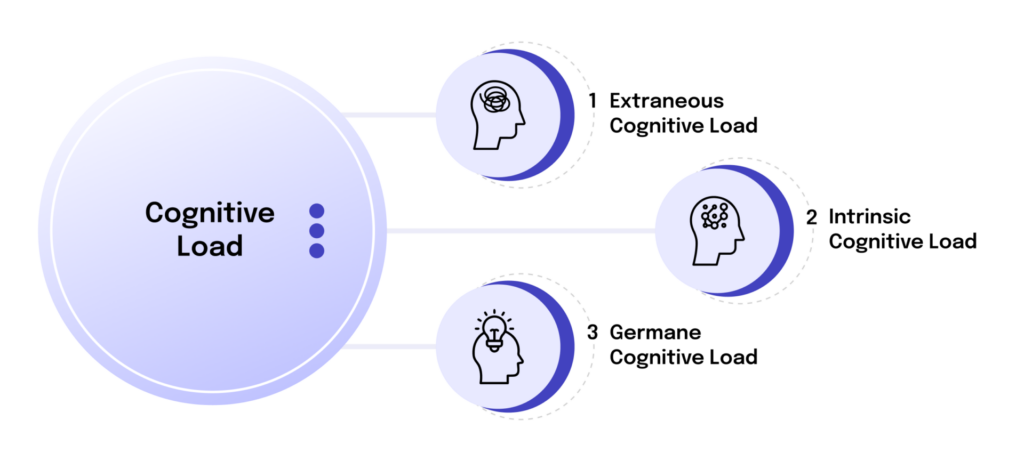
Cognitive load is the amount of mental effort a person must spend to perceive, understand, decide, and act, and in startups it matters because every extra step, choice, or ambiguity taxes users’ limited working memory.
[1]
[2]
The term applies when a product, workflow, or organizational change makes people think harder than necessary to complete a task, especially when that effort comes from interface clutter, unclear sequencing, or having to remember too much at once.
[1]
[2]
It does not mean “complexity” in the abstract; a product can be sophisticated yet low-load if it guides attention well and reduces unnecessary decision-making.
[1]
[3]
Consultants care because cognitive load often shows up as slower adoption, more errors, drop-off, and lower willingness to try a new tool or process.
[1]
[4]
Disambiguation
Primary sense — the innovation-consulting sense
Cognitive load is the mental bandwidth a user or employee expends to successfully complete a task , especially when evaluating product UX, onboarding, workflows, or change programs.
[1]
[2]
Other senses
1. Cognitive load theory (educational psychology)
Cognitive load theory is the instructional-design framework developed by John Sweller in the late 1980s to explain how limited working memory constrains learning.
[6]
[7]
[3]
2. Psychological workload / task burden
Cognitive load is also used more generally to mean the total mental effort demanded by a task or environment.
[1]
[10]
Etymology and Origin
Adjacent Vocabulary
- Antonyms : Frictionless Experiences — design outcome of low effort; simplicity — fewer moving parts; clarity — less interpretive effort. [1] [5]
- Adjacent terms : working memory , extraneous load , intrinsic load , germane load , usability , onboarding
Usage in Practice
- “If instruction puts too much demand on this limited workspace, learning fails.” [6]
- “Good teaching reduces unnecessary mental effort so that more capacity remains for actual understanding.” [6]
- Cognitive load theory “was introduced in the 1980s as an instructional design theory” rooted in human cognitive architecture. [7]
- Sweller’s foundational work is described as explaining why “the human brain has a finite processing capacity, and when total demands exceed that capacity, learning breaks down.” [12]
- In UX practice, cognitive load is “the amount of mental effort users must expend to perceive, understand, decide, and act within an interface.” [1]
- Designers are urged to “Prioritise recognition over recall” and “Limit active choices” to reduce load in interfaces. [5]
- In product language, cognitive load is treated as something a roadmap should reduce: “Does this feature reduce effort or add it?” [5]