


Computational Biology
Defining and Describing Computational Biology
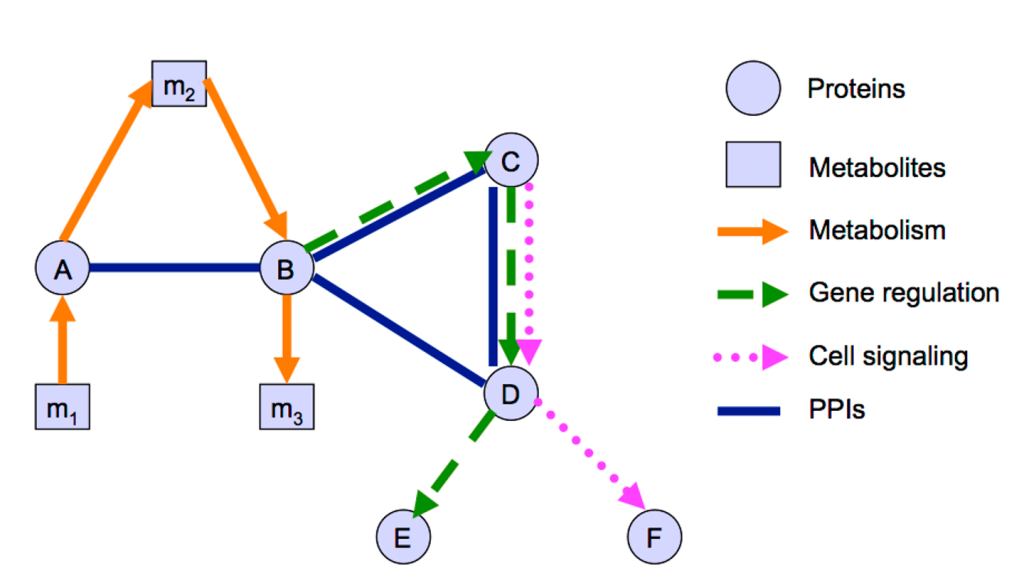
- _Computational biology is the use and development of computational, statistical, and
- In startup and innovation contexts, the term applies when computation is part of the core scientific engine—not merely administrative software or digitized laboratory record-keeping. [1] It covers activities such as sequence analysis, molecular modeling, systems modeling, biomarker discovery, virtual screening, and interpretation of large biological datasets. [2] [3] An innovation consultant would care because computational biology can change a company’s cost structure, product-development cycle, evidence strategy, and organizational need for hybrid biology–software talent. [2] [4]
Disambiguation
Primary sense — the innovation-consulting sense
- It includes both applying existing algorithms and developing new computational methods to solve biological problems. [1]
- It is not synonymous with “using AI in healthcare”: a computational-biology product must address a biological question, data-generating process, or mechanistic model, whereas generic software may simply support laboratory operations.
Other senses
1. Computational biology as an academic research field
- The field can produce foundational methods and open tools rather than a commercial product; startups often commercialize only one layer of that research stack.
2. Computational biology as a biotechnology operating capability
- The strategic question is not whether a company “has AI,” but whether computation improves a measurable bottleneck such as hit finding, experimental throughput, validation, or time to candidate selection.
- This capability may be embedded in a platform company, a drug-discovery team, a diagnostics business, or a contract research organization.
Etymology and Origin
- The modern field grew from earlier work applying information theory, algorithms, sequence analysis, and computing to biological systems; Margaret Dayhoff’s computational protein work and sequence-alignment methods were important early foundations. [7]
- The field expanded sharply in the 1990s as sequence databases, DNA sequencing, and the Human Genome Project increased both the volume of biological data and the need for computational interpretation. [2]
Adjacent Vocabulary
- Synonyms :
- In silico biology : Highlights computer-based experimentation or simulation rather than laboratory experimentation.
- Quantitative biology : Emphasizes measurement, mathematical analysis, and predictive models across biological scales.
- Systems biology : Focuses on integrated, multiscale, and often mechanistic models of biological systems. [3]
- Antonyms :
- Wet-lab biology : Experimental biology conducted primarily through physical laboratory procedures.
- Empirical trial-and-error discovery : Discovery driven mainly by experiments without substantial computational prioritization or modeling.
-
- Adjacent terms : Bioinformatics , Systems Biology , Machine Learning , Drug Discovery , Multi Omics , Synthetic Biology
Usage in Practice
- “Computational Biology is a field that uses methods in computer science, statistics and modeling to solve biological problems.” — Larracuente Lab. [1]
- “The term computational biology can refer to building and using models of biological systems.” — summary of the field’s disputed terminology. [2]
- “All biology is computational biology.” — Ming “Tommy” Tang, arguing that modern biological questions increasingly require computation at scale. [8]
- “The modular LEGO principle of building blocks for protein function.” — Peer Bork, describing a computationally informed view of protein domains and function. [5]
- “I believe that the progress of the gut microbiome research towards improving human health can be paralleled by global microbiomics towards planetary health.” — Peer Bork, connecting computational microbiome research to broader health and planetary applications. [5]
- “Life is three-dimensional, and it begins with molecules.” — Phil Bourne, framing structural computation as a foundation for understanding biology across scales. [6]
- “Instead of relying only on lab experiments,” companies can use computation to predict drug–target interactions, perform virtual screening, and identify drug targets. [4]
Common Misuses
- Calling any laboratory software “computational biology.” Better term: laboratory information management system, research software, or digital lab operations.
- Calling a dashboard that reports biological measurements “computational biology” when it performs no biological inference or modeling. Better term: bio-data analytics or scientific reporting.
- Using “AI-powered computational biology” as a slogan without specifying the biological task, training data, validation method, or decision improved. Better term: machine-learning-assisted sequence analysis, virtual screening, or predictive biomarker modeling.
- Treating bioinformatics and computational biology as interchangeable in every context. Better term: use bioinformatics for data processing and annotation, and computational biology for broader modeling, prediction, and biological explanation—while acknowledging that real-world usage overlaps. [1] [2]
Sources
[1] 2026, Aug 10. sites.rochester.edu . Computational Biology - Larracuente Lab - University Blog Sites . Updated: 2026, Oct 07. Generated: 2026, Nov 13. Perplexity API response.
[2] 2026, Aug 07. studylib.net . Bioinformatics: Definition, History, and Applications . Updated: 2026, Sep 20. Generated: 2026, Nov 13. Perplexity API response.
[3] 2026, Jul 10. journals.plos.org . Systems biology during 20 years of PLoS Computational Biology . Updated: 2026, Oct 26. Generated: 2026, Nov 13. Perplexity API response.
[4] 2026, Mar 19. linkedin.com . Bioinformatics Beyond the Lab: Data-Driven Science at GENOS . Updated: 2026, Apr 02. Generated: 2026, Nov 13. Perplexity API response.
[5] 2026, Jan 07. academic.oup.com . Peer Bork (1963–2026): pioneer of computational biology ... . Updated: 2026, Nov 10. Generated: 2026, Nov 13. Perplexity API response.
[6] 2026, Jan 07. academic.oup.com . Phil Bourne (1953–2026): from small molecules to big data ... . Updated: 2026, Nov 10. Generated: 2026, Nov 13. Perplexity API response.
[7] 2026, Jul 03. academic.oup.com . Eras of bioinformatics technologies from command-line ... . Updated: 2026, Nov 13. Generated: 2026, Nov 13. Perplexity API response.
[8] 2026, Jul 27. x.com . Ming "Tommy" Tang on X: "I hope you've found this post ... . Updated: 2026, Sep 03. Generated: 2026, Nov 13. Perplexity API response.
[9] 2026, Jul 01. academic.oup.com . 2026 ISCB Accomplishments by a Senior Scientist Award—Dr ... . Updated: 2026, Nov 13. Generated: 2026, Nov 13. Perplexity API response.
[10] 2026, Jun 11. linkedin.com . Martin Rønn Madsen's Post - LinkedIn . Updated: 2026, Jun 19. Generated: 2026, Nov 13. Perplexity API response.