


Conversational AI

ChatGPT
chatgpt.comA conversational AI system that listens, learns, and challenges
Local, Open-Source AI Search
perplexica.ioChat with the internet, chat with Perplexica.

Claude
claude.aiTalk with Claude, an AI assistant from Anthropic

Fast, Helpful AI Chat
poe.com
LM Studio - Discover, download, and run local LLMs
lmstudio.ai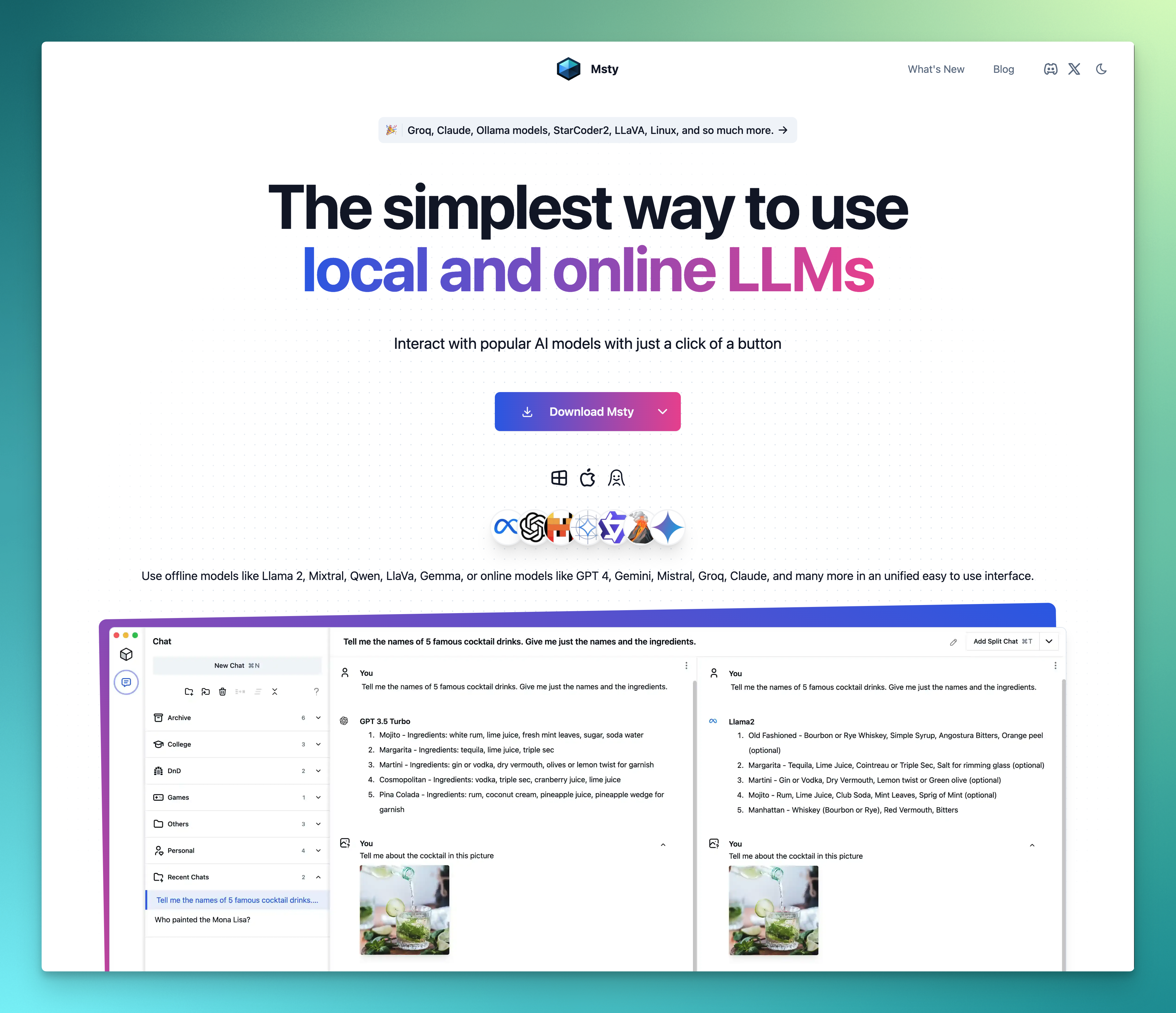
Msty - Using AI Models made Simple and Easy
msty.app
Find your perfect customers in one prompt
origami.chatDescribe your ideal customer and Origami finds them. AI-powered prospecting that turns a single prompt into a qualified lead list.


Self-Hosted AI Platform
www.openwebui.comRun AI on your own terms. Connect any model, extend with code, protect what matters—without compromise.


AI Voice Agent Platform to Automate Your Phone Calls
synthflow.aiCreate custom AI phone call agents effortlessly with Synthflow. No coding or tech skills needed—just your data and ideas for powerful automation.
Conversational AI is the layer that lets software talk back in human language, but its modern form grew out of decades of much simpler, rule-based chatbots rather than a single breakthrough.
[1]
[2]
Conversational AI is a field of AI that uses natural language processing, machine learning, and related techniques to let people interact with software through text or voice in a human-like way.
[3]
[4]
[5]
It matters because it powers customer support bots, virtual assistants, and other interfaces that translate human intent into software actions across channels.
[4]
[6]
[7]
Defining and Describing Conversational AI
- [IMAGE 1: Conversational AI stack showing text or voice input, language understanding, dialogue management, and system response]
- A common modern definition says it is “intelligent software” that uses NLP, ML, and other AI methods to understand, process, and respond to human language. [5]
- In platform terms, it is software infrastructure for building, deploying, and managing AI-powered conversations across customer-facing channels. [4]
Uses in Context
History of Use
Origins
Conversational AI did not emerge from one origin point; its ancestry is usually traced to early chatbot work, especially ELIZA , created by Joseph Weizenbaum at MIT in 1966.
[2]
[14]
[15]
ELIZA is widely described as the first chatbot and a rule-based program that simulated conversation by pattern matching and scripted replies, making it the earliest clear ancestor of conversational AI.
[2]
[16]
[15]
The phrase “conversational AI” itself appears much later in the literature and media than ELIZA, with one source noting that the term emerged in the 1990s as an abbreviation for “chatterbot.”
[15]
Evolution
Best Real-World Examples
- Rasa Open Source — commonly cited as a mature Python-based framework for conversational assistants. [18] [19]
- Dialogflow — a natural language understanding platform for conversational interfaces across devices and messaging channels. [10]
- IBM Watson Assistant — an enterprise assistant platform used for customer support and omnichannel automation. [9] [8]
Case Studies
One useful case study is ELIZA , created by Joseph Weizenbaum at MIT in 1966.
[2]
[14]
[15]
ELIZA used scripted pattern matching to imitate a Rogerian psychotherapist, and it showed that users could experience simple systems as conversational even when the underlying logic was shallow.
[16]
[2]
That matters because it established the core illusion that still shapes conversational interface design: a system does not need deep understanding to feel conversational, but it does need turn-taking, response timing, and plausible language.
[15]
[16]
A second case study is ALICE , released in 1995 by Richard Wallace.
[2]
[1]
ALICE used AIML, a structured markup language for chatbot rules, and it helped scale internet-era chatbot interactions while staying within predefined templates.
[1]
[2]
This shows a key transition in conversational AI history: from isolated demos to reusable software systems that could be deployed on the web and extended by communities of users and developers.
[1]
[2]
A third case study is Chat GPT , launched by OpenAI in November 2022.
[13]
[17]
Source material describes it as a breakthrough because it could conduct “human-like conversations” on many topics and became the fastest application to reach 100 million users.
[13]
In the conversational AI timeline, ChatGPT marks the shift from narrow scripted bots to context-aware, large-language-model systems that made conversational interfaces mainstream rather than niche.
[4]
[13]
[17]