
Knowledge Management

Defining and Describing Knowledge Management
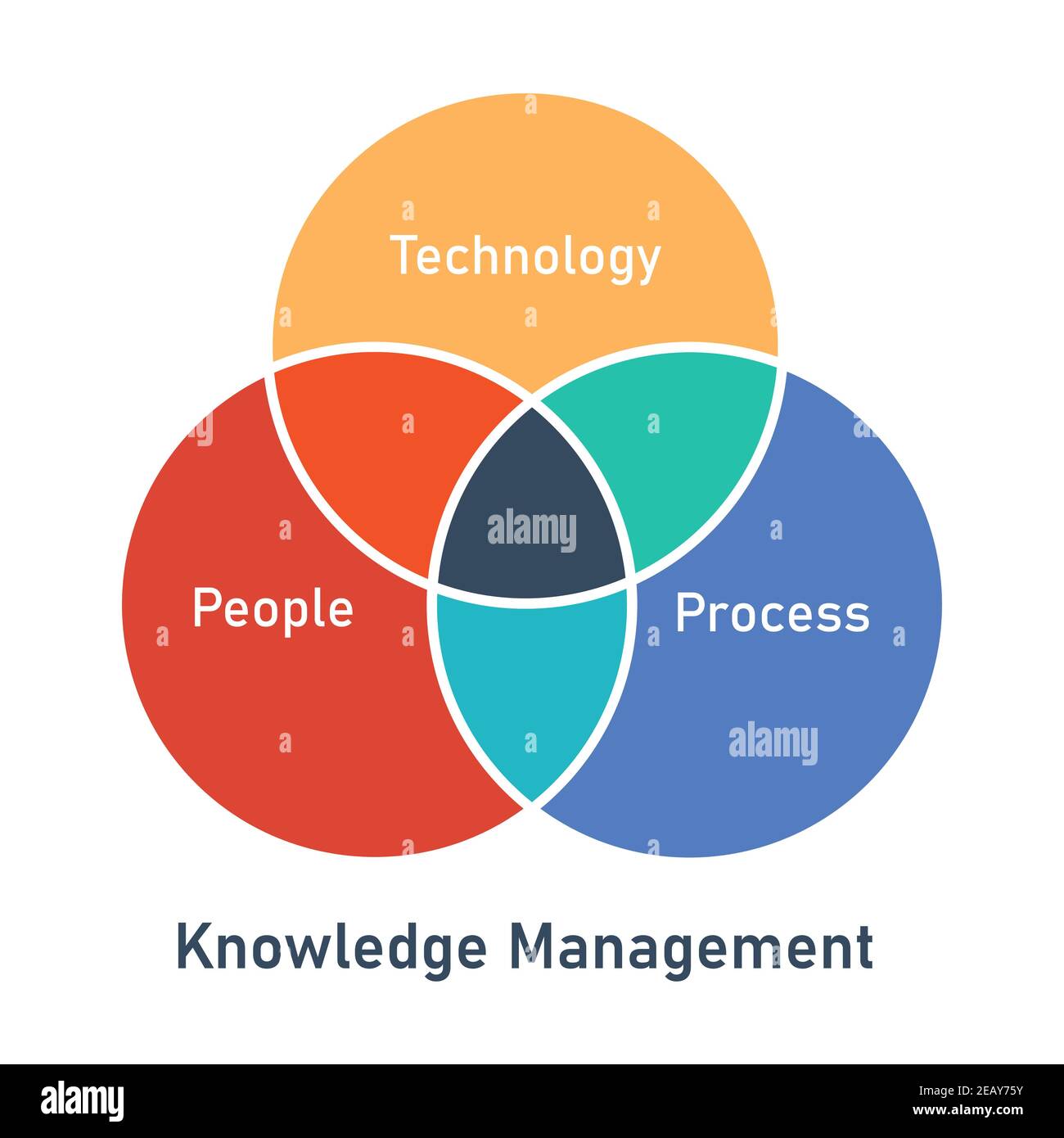
  • Knowledge management turns what an organization knows into something people can find, share, improve, and use.
  • Knowledge management (KM) is the structured practice of creating, capturing, organizing, KMsharing, applying, and retaining organizational knowledge. [1] It combines organizational processes, human collaboration, information practices, and technology to support institutional objectives. [1]
  • The field is multidisciplinary, drawing on organizational science, cognitive science, library and information science, information systems, and management research. [2]
  • KM applies wherever knowledge must move between people, teams, systems, or organizational generations—for example, during innovation, onboarding , expert Handoffs , mergers, compliance work, and operational improvement. [3] [1]
flowchart LR A["Knowledge needs"] --> B["Create or acquire"] B --> C["Capture and structure"] C --> D["Store and find"] D --> E["Share and apply"] E --> F["Learn and improve"] F --> B

Uses in Context

  • Organizational learning: KM describes practices that help employees generate, exchange, and reuse knowledge rather than repeatedly solving the same problems. [3] [4]
  • Knowledge repositories: The term can refer to systems that collect documents, records, expertise, taxonomies, metadata, and other organizational information in findable forms. [1]
  • Expertise transfer: KM is invoked when organizations need to surface tacit expertise and transfer it through communities, mentoring, collaboration, documentation, or structured workflows. [3] [4]
  • Search and discovery: In technology contexts, KM includes enterprise search, semantic classification, linked data, autoclassification, and taxonomies that improve findability. [5] [1]
  • Innovation management: KM describes the conversion of individual and collective knowledge into new products, services, processes, and organizational capabilities. [4]
  • Risk and continuity: Organizations use KM to preserve knowledge during staff turnover, restructuring, mergers, and other disruptions. [6] [1]

History of Use

Origins

  • The modern KM literature is commonly associated with Karl Wiig’s Knowledge Management Foundations (1993), which examined how people and organizations create, represent, and use knowledge, and with Ikujiro Nonaka and Hirotaka Takeuchi’s The Knowledge Creating Company (1995). [7]
  • Nonaka and Takeuchi developed the SECI model, describing organizational knowledge creation as the continual transformation of tacit and explicit knowledge. [4]
  • The concept did not originate from a single discipline or institution; its development reflects converging work on organizational learning, tacit knowledge, information management, cognition, and innovation. [2] [4]

Evolution

  • 1960s–1980s: Management thinkers increasingly treated knowledge as a strategic organizational resource, while research on tacit knowledge and organizational learning supplied conceptual foundations for later KM. [8] [4]
  • 1993–1995: Wiig formalized KM as a field concerned with creating, representing, and using knowledge, while Nonaka and Takeuchi connected knowledge creation to innovation through the SECI model. [7] [4]
  • 2000s–present: KM expanded from repositories and intranets toward semantic technologies, taxonomies, linked data, enterprise search, process mining, collaboration platforms, and AI-assisted discovery. [5] [3] [1]

Best Real-World Examples

  • Apache Jena — an open-source framework used for semantic web and linked-data applications within KM architectures. [5]
  • Apache Solr — an open-source search platform used in KM systems to improve retrieval across organizational repositories. [5]
  • Alfresco Community Edition — an open-source content and records-management component used in a KM technology stack. [5]
  • Smartlogic Semaphore — a semantic platform used for taxonomy management and autoclassification in knowledge repositories. [5] [9]
  • Talend — a data-integration component used to connect information sources in a KM architecture. [5]
  • MySQL — a relational database used as part of a KM data backbone. [5]
  • SECI model — a research framework explaining how tacit and explicit knowledge interact during organizational knowledge creation. [4]

Case Studies

The Bridgeway Foundation illustrates KM as an architecture rather than a single application. Its existing environment combined structured business intelligence, a relational database, collaboration tools, cloud storage, and sensitive field-based intelligence; the recommended roadmap integrated these capabilities with open-source and commercial components for transcription, linked data, enterprise search, content management, taxonomy management, autoclassification, and data integration. [5] The proposed implementation was organized into four phases over 12–14 months, with open-source software used extensively to preserve resources for the foundation’s mission. [5] The case shows that KM depends on connecting processes, information structures, search, classification, and governance—not merely installing a repository.
A federal-proposal organization faced knowledge fragmentation after a rapid series of mergers, with proposal content distributed across more than 20 disconnected repositories. [6] The KM challenge was therefore operational: make dispersed institutional knowledge available when teams needed to respond to requests for proposals. [6] The case demonstrates how KM supports reuse, continuity, and coordinated work after organizational change, especially when valuable knowledge is trapped in disconnected systems.
A top-10 accounting firm moved from KM strategy to working software by implementing and testing semantic autoclassification across its principal knowledge repositories. [9] The project used semantic classification to improve the organization and retrieval of repository content rather than relying solely on manual filing. [9] This illustrates the field’s evolution toward machine-assisted organization, while preserving the central KM objective: making institutional knowledge easier to find and apply.

Sources

[1] 2026, Feb 05. nationalacademies.org . The Business Case for Knowledge Management: A Guide (2026) . Updated: 2026, Sep 23. Generated: 2026, Nov 15. Perplexity API response.

[2] 2026, Jan 01. dialnet.unirioja.es . Knowledge Management - Dialnet - Universidad de La Rioja . Updated: 2026, Jan 23. Generated: 2026, Nov 15. Perplexity API response.

[5] 2026, Aug 28. iknow.us . KM Technology Roadmap for the Bridgeway Foundation . Updated: 2026, Nov 11. Generated: 2026, Nov 15. Perplexity API response.

[6] 2026, Aug 27. iknow.us . Knowledge Management for Federal Proposals and RFPs . Updated: 2026, Nov 10. Generated: 2026, Nov 15. Perplexity API response.

[7] 2026, Jun 02. link.springer.com . The Origin of Knowledge Management . Updated: 2026, Oct 22. Generated: 2026, Nov 15. Perplexity API response.

[9] 2026, Aug 27. iknow.us . Semantic Autoclassification at a Top-10 Accounting Firm . Updated: 2026, Nov 11. Generated: 2026, Nov 15. Perplexity API response.

[10] 2025, Nov 27. id.scribd.com . Knowledge Management | PDF | Collaboration . Updated: 2026, Oct 19. Generated: 2026, Nov 15. Perplexity API response.