


Genetics
Defining and Describing Genetics
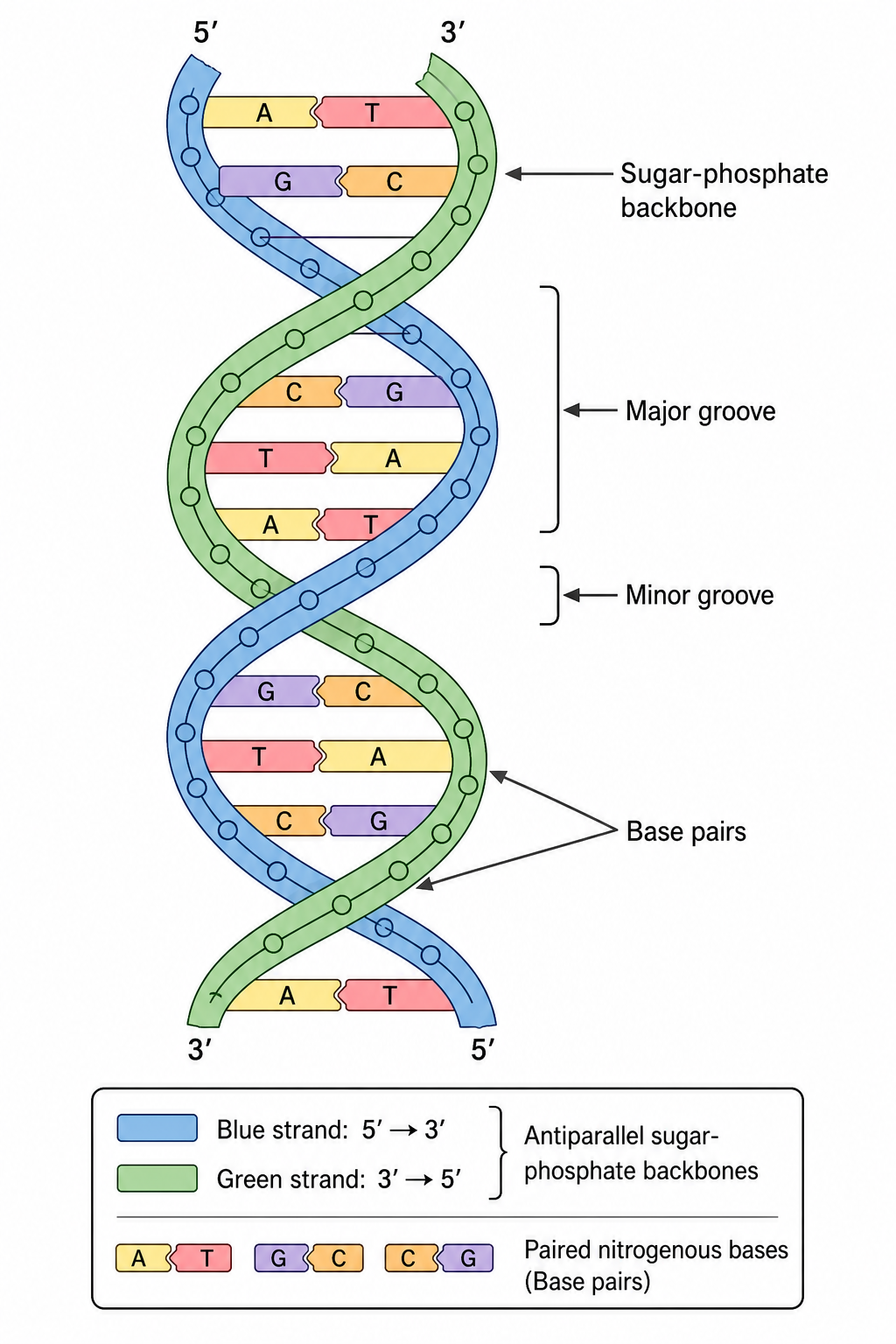
- The term applies when an opportunity depends on inherited biological information, DNA variation, gene function, or the transmission of traits. [2] [3] It does not refer to every biological innovation: technologies such as tissue engineering or conventional drug discovery may be adjacent without being primarily genetic. [2] Innovation consultants care because genetics can turn biological differences into product inputs—for example, diagnostic stratification, personalized medicine, agricultural traits, or gene-based interventions. [2] [4]
Disambiguation
Primary sense — the innovation-consulting sense
Other senses
1. Genetics as a scientific discipline
- Mendelian dominant-and-recessive inheritance is only one way genes influence traits; many traits arise through multiple genes and environmental interactions. [6]
2. Genetics as a technology and data domain
- Genetic testing can identify variants associated with inherited conditions or treatment-relevant characteristics. [4]
- A company may describe itself as a “genetics” business even when its actual product is testing, software, sample processing, therapeutics, or clinical decision support; the business model should be named more precisely.
Etymology and Origin
- The term was adopted publicly in connection with the 1906 International Conference on Plant Hybridization, helping establish genetics as the name of the emerging discipline. [5]
Adjacent Vocabulary
- Synonyms :
- Genomics : the study and use of genomes at whole-system scale; often more data-intensive and platform-oriented than genetics. [2]
- Genetic engineering : the deliberate modification or recombination of genetic material; an application of genetics rather than a full synonym. [4]
- Molecular biology : the study of biological mechanisms at the molecular level; overlaps with genetics but also covers nonhereditary processes. [2]
- Antonyms :
- Environmental determination : explanations of traits based primarily on external conditions rather than inherited variation.
- Acquired-character model : a contrasting account in which traits arise during an organism’s lifetime rather than through inherited genetic information.
-
- Adjacent terms :
- Genomics
- TechBio
- Gene Editing
- Genetic Testing
- Biotechnology
-
Usage in Practice
- “Genetics” was proposed as a suitable name for the “study of heredity” because no common single word adequately expressed that meaning. [7]
- In biomedical innovation, genetic testing is used to identify conditions that may require treatment, while genetic engineering alters DNA characteristics. [4]
- Genome editing gives researchers the ability to change an organism’s DNA, making genetics a direct input into therapeutic, agricultural, and industrial product design. [2]
- Contemporary genetics recognizes that genes influence traits through more than simple dominant-and-recessive inheritance, which matters when translating genetic signals into clinical or commercial predictions. [6]
Common Misuses
- Calling any biotech company a genetics company when its product does not measure, interpret, or alter genetic information; use biotechnology company , biopharma company , or the specific modality instead.
- Using genetics to mean only DNA sequencing; use genetic testing , sequencing , or genomic analysis when that is the actual capability.
- Treating a genetic association as proof of causation or as a guaranteed outcome; use genetic risk marker or correlation unless causal evidence exists.
- Using personalized medicine as a synonym for genetics; personalized medicine may also use clinical history, lifestyle, imaging, proteomics, and other non-genetic data.
Sources
[1] 2026, Jun 17. medicover-genetics.com . The origin of the words gene, genome and genetics . Updated: 2026, Nov 03. Generated: 2026, Nov 14. Perplexity API response.
[2] 2026, Oct 07. orbisica.com . Genetics: Genes, Heredity and the Story of DNA — Orbisica . Updated: 2026, Oct 27. Generated: 2026, Nov 14. Perplexity API response.
[3] 2026, May 16. pearson.com . Genetics Study Guide: Key Concepts, DNA, and Biotechnology | Notes . Updated: 2026, Oct 11. Generated: 2026, Nov 14. Perplexity API response.
[4] 2025, Dec 08. worldhistory.org . A Brief History of Genetics: How Genetics Transformed ... . Updated: 2026, Nov 10. Generated: 2026, Nov 14. Perplexity API response.
[5] 2026, Jan 19. nationalgeographic.com . How Gregor Mendel's pea plant experiments created modern genetics . Updated: 2026, Oct 26. Generated: 2026, Nov 14. Perplexity API response.
[6] 2026, Nov 14. genome.gov . Mendel, Johann (Gregor) . Generated: 2026, Nov 14. Perplexity API response.
[7] 2026, May 01. linkedin.com . Cell Press' Post - LinkedIn . Updated: 2026, May 09. Generated: 2026, Nov 14. Perplexity API response.
[8] 2026, Apr 29. studocu.com . Lecture 5 Handout: The Origins of Genetics and Heredity Laws . Updated: 2026, Jun 06. Generated: 2026, Nov 14. Perplexity API response.
[9] 2026, Nov 10. new.esp.org . Electronic Scholarly Publishing . Updated: 2026, Nov 13. Generated: 2026, Nov 14. Perplexity API response.
[10] 2026, Mar 28. studocu.com . CYTOGENETICS BSMT 2A LECTURE NOTES: ORIGIN & APPLICATIONS OF GENETICS . Updated: 2026, Sep 07. Generated: 2026, Nov 14. Perplexity API response.