


High‑Performance Computing
Defining and Describing High‑Performance Computing
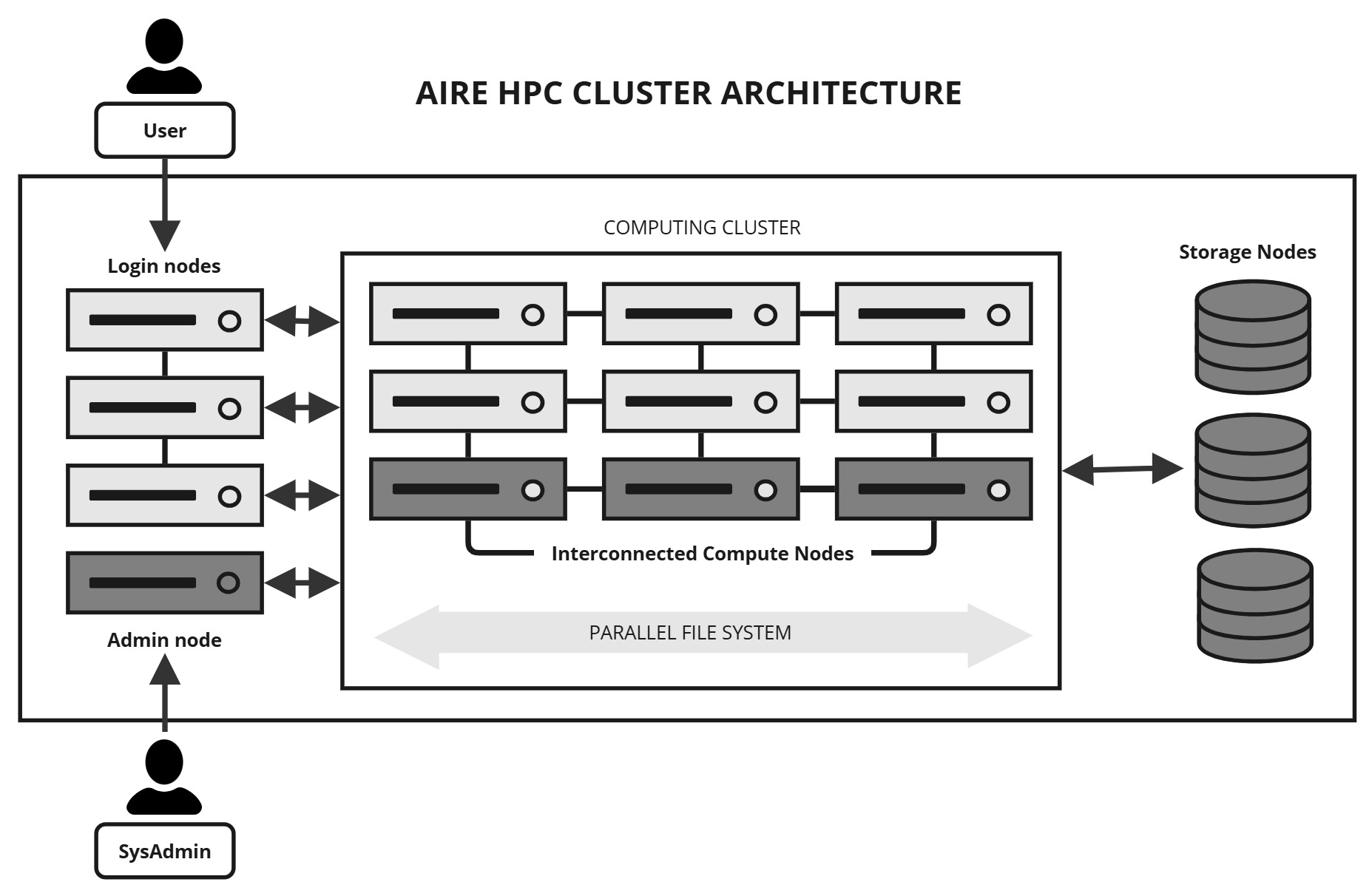
- High-performance computing (HPC) is the use of parallel, tightly integrated computing systems to solve computationally intensive problems faster or at a scale that ordinary computers cannot economically support. [1]
- HPC applies when a startup, research team, or enterprise needs large-scale simulation, optimization, scientific modeling, data processing, or AI training—not merely when software is generally “fast.” [2] [1] An innovation consultant cares because HPC can change product feasibility, development cycles, capital requirements, and the economics of technology adoption. The strategic question is usually not “Can the organization buy more compute?” but “Does faster or larger-scale computation create defensible customer value?”
Disambiguation
Primary sense — the innovation-consulting sense
- For business strategy, the relevant output is usually throughput, time-to-result, accuracy, or cost per computation rather than a benchmark score; a faster system matters only when it improves customer outcomes or operating economics.
- HPC is not synonymous with ordinary cloud computing: cloud infrastructure may host HPC workloads, but generic virtual machines do not automatically provide parallel architectures, high-speed interconnects, or optimized execution. [1]
- HPC is not automatically AI: AI workloads increasingly use accelerator-rich HPC systems, but HPC also covers non-AI simulation, modeling, optimization, and engineering applications. [1]
Other senses
1. Supercomputing
- A startup does not need to own a national-scale supercomputer to use HPC; access can come through rented cloud capacity, research infrastructure, or specialized providers. [3]
2. Parallel and distributed computing
- For innovation teams, the key boundary is software suitability: a workload that cannot be decomposed efficiently may gain little from expensive HPC infrastructure.
- High-speed interconnects, memory movement, storage, compilers, and workload orchestration can matter as much as raw processor count. [1]
Etymology and Origin
- The modern HPC tradition traces to the emergence of supercomputers in the 1960s, when systems were designed to solve large scientific and engineering problems faster than conventional computers. [7]
- In contemporary business vocabulary, “HPC” broadened beyond a particular supercomputer to describe an ecosystem of hardware, software, networking, cloud access, and operational expertise. Startups and research spin-offs now work on interconnects, cooling, compute infrastructure, and HPC access models. [8]
Adjacent Vocabulary
- Synonyms :
- Supercomputing : Often used interchangeably with HPC, but more strongly associated with the most powerful individual systems or facilities. [4]
- Scientific computing : Focuses on computational research and modeling, whereas HPC also serves commercial, industrial, and AI workloads. [1]
- Accelerated computing : Emphasizes GPUs or other accelerators; it is an important modern HPC architecture, not a full synonym. [1]
-
- Antonyms :
- Serial computing : Executes a workload primarily one operation at a time rather than distributing it across many processors.
- Commodity computing : Uses general-purpose infrastructure for routine workloads without the specialized scale or performance characteristics associated with HPC.
-
- Adjacent terms : Cloud-Native Computing , Parallel Computing , GPU , Scientific Computing , AI Infrastructure
Usage in Practice
- “HPC is a computing approach that uses parallel processing, high-speed interconnects and optimized system architectures to solve computationally intensive problems and process large datasets with very high throughput.” — Micron glossary. [1]
- “High-performance computing is a form of digital computation that allows users to tackle and solve complex problems at a faster rate than standard PCs allow.” — HP. [2]
- “The field of high performance computing can trace its roots to the development of the earliest supercomputers in the 1960s.” — doQumentation. [7]
- “HPC shifted toward clustered and massively parallel architectures” as computing became more distributed across interconnected nodes. [7]
- “New startups and research spin-offs” are working on superconducting compute, silicon-photonic interconnects, advanced cooling, and related infrastructure. [8]
- A Luxembourg startup-support program reported supporting more than 50 startups with GPU and CPU node-hours plus technical consulting, illustrating HPC as an externally accessed capability rather than only an owned asset. [3]
Common Misuses
- Calling any high-throughput web application “HPC.” Better term: Scalable Cloud Infrastructure or Distributed Systems , unless the workload uses HPC-style parallelism and specialized infrastructure.
- Calling every GPU-enabled product “HPC.” Better term: Accelerated Computing or AI Infrastructure when the system’s main purpose is machine learning inference or training.
- Treating a large server budget as an HPC strategy. Better term: Compute Capacity Planning ; HPC requires workload fit, software optimization, networking, data movement, and operational expertise. [1]
- Using “HPC” as a prestige label without identifying the business outcome. Better term: or Unit Economics — especially when faster computation does not improve customer value, decision quality, or cost structure.
Sources
[1] 2026, Oct 28. micron.com . What is high-performance computing? . Updated: 2026, Oct 03. Generated: 2026, Nov 07. Perplexity API response.
[2] 2026, Jul 23. hp.com . The Future of High-Performance Computing | HP® Official Site . Updated: 2026, Oct 26. Generated: 2026, Nov 07. Perplexity API response.
[3] 2026, Feb 05. siliconluxembourg.lu . From Test To Scale: How Luxembourg Startups Leverage Supercomputing . Updated: 2026, Oct 31. Generated: 2026, Nov 07. Perplexity API response.
[4] 2026, May 12. everpuredata.com . What Is a Supercomputer? . Updated: 2026, Oct 31. Generated: 2026, Nov 07. Perplexity API response.
[5] 2026, Jul 23. hp.com . Supercomputing History: From Early Days to Today . Updated: 2026, Oct 27. Generated: 2026, Nov 07. Perplexity API response.
[6] 2026, Nov 02. computinghistory.org.uk . Seymour Cray . Updated: 2026, Oct 29. Generated: 2026, Nov 07. Perplexity API response.
[7] 2026, Sep 01. doqumentation.org . Introduction · Integrating quantum and high-performance computing | doQumentation . Updated: 2026, Nov 03. Generated: 2026, Nov 07. Perplexity API response.
[8] 2026, Feb 21. startus-insights.com . High Performance Computing Innovations . Updated: 2026, Oct 10. Generated: 2026, Nov 07. Perplexity API response.
[9] 2026, Nov 02. hpe.com . The Future of Supercomputing with HPE Cray . Updated: 2026, Nov 06. Generated: 2026, Nov 07. Perplexity API response.
[10] 2026, Oct 12. hpe.com . Cray history - Supercomputers inspired by curiosity - Seymour ... . Updated: 2026, Oct 29. Generated: 2026, Nov 07. Perplexity API response.