


Illumination Management Systems
Defining and Describing Illumination Management Systems
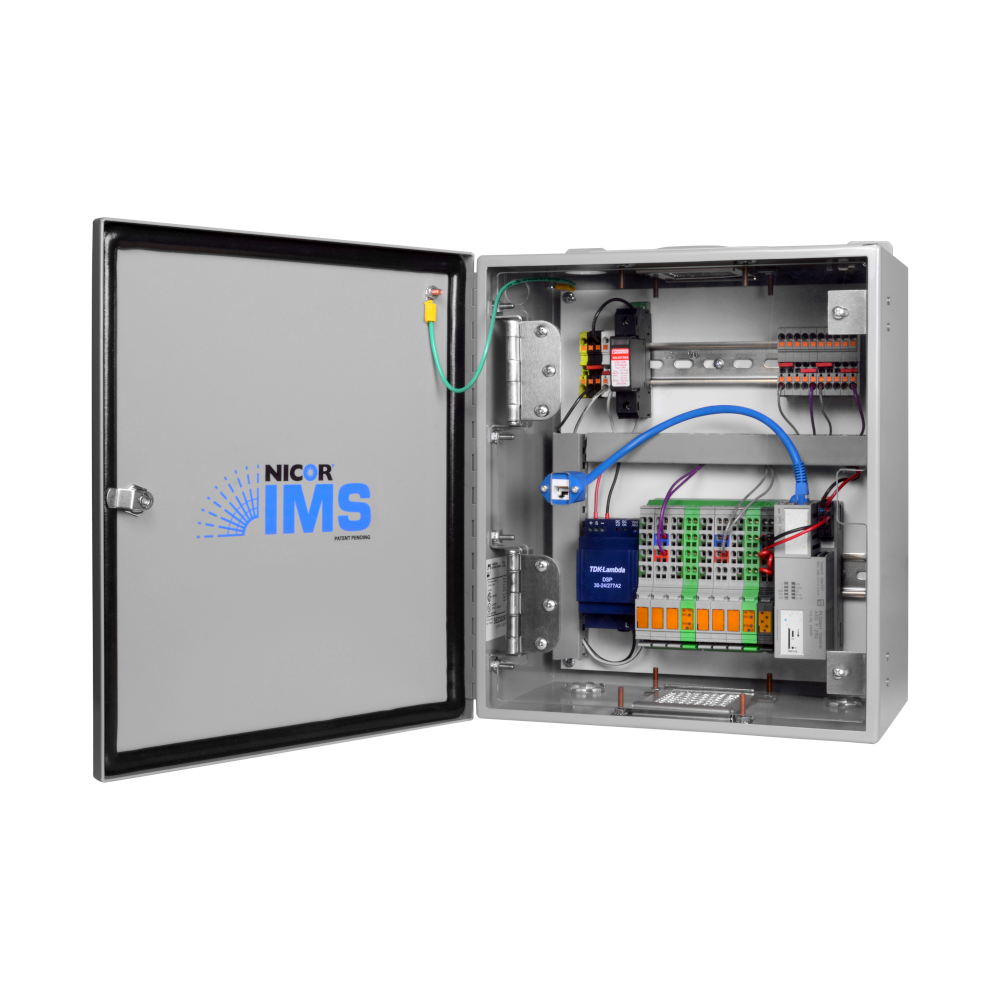
Uses in Context
- In Smart Buildings , the term describes systems that adjust lighting in response to occupancy, daylight, activity, or measured illuminance to reduce unnecessary energy consumption. [1] [2] [4]
- In offices and campuses, it can refer to localized dimming that maintains target illumination around occupied zones rather than lighting an entire space uniformly. [5]
- In galleries and museums, illumination management encompasses spectral control, glare reduction, visual performance, and protection of light-sensitive materials. [6]
- In public art and urban installations, it describes responsive LED control that changes brightness or creates illuminated pathways according to pedestrian position and density. [7]
- In facilities management, the concept includes automated fault detection and maintenance workflows for lighting infrastructure. [3]
History of Use
Origins
- The modern technical idea is rooted in automated lighting-control research rather than a single universally documented invention. A 2010 study on occupancy-based LED control formulated illumination management as an optimization problem: minimize power consumption while maintaining uniform illumination around occupied zones. [5]
- Earlier work also combined natural-light monitoring, occupancy control, wireless lamp-mounted devices, and user preferences; one reported implementation achieved up to 69.6% energy savings and 30.5% avoided carbon-dioxide emissions in its tested scenarios. [5]
- The concept therefore emerged from the convergence of energy-efficient solid-state lighting, sensor networks, occupancy research, and building automation rather than from the product strategy of one dominant technology company. [5]
Evolution
- 2010: Occupancy-based LED control formalized localized illumination and dimming as an optimization problem, shifting lighting management from simple on/off switching toward spatially targeted control. [5]
- 2023: IoT-based automated fault diagnostics expanded the concept from real-time illumination control to lifecycle maintenance and failure detection. [3]
Best Real-World Examples
- Occupancy-based LED illumination control — optimizes dimming levels around occupied areas while maintaining a specified illumination target. [5]
- Distributed multi-state campus lighting — uses active, dim, and idle states driven by real-time occupancy detection. [9]
- Image-based indoor illuminance mapping — estimates illumination at indoor points without dedicated light-measurement sensors and reported a mean absolute percentage error of 11%. [2]
- IoT-based automated fault diagnostics — applies connected monitoring to lighting maintenance and fault identification. [3]
- Adaptive urban LED light-art control — adjusts brightness according to pedestrian location, velocity, and density while balancing uniformity and energy use. [7]
- Material-specific gallery lighting strategies — integrates spectral distribution, wavelength-dependent damage, glare control, visual performance, and energy optimization. [6]
- Building Energy Management Systems — provides the wider building-automation context in which intelligent lighting, sensors, IoT, and AI are integrated. [1]
Case Studies
Sources
[1] 2025, Dec 12. mdpi.com . A Systematic Review of Building Energy Management ... . Updated: 2026, Nov 17. Generated: 2026, Nov 17. Perplexity API response.
[2] 2026, Aug 19. pmc.ncbi.nlm.nih.gov . A Method for Generating Real-Time Indoor Illuminance Maps ... . Updated: 2026, Nov 08. Generated: 2026, Nov 17. Perplexity API response.
[3] 2026, Oct 30. iris.polito.it . PORTO @ Archivio Istituzionale della Ricerca . Updated: 2026, Nov 04. Generated: 2026, Nov 17. Perplexity API response.
[4] 2026, Apr 07. preprints.org . Re-Thinking Lighting in Educational Buildings: A Climate ... . Updated: 2026, Nov 17. Generated: 2026, Nov 17. Perplexity API response.
[5] 2025, Dec 29. academia.edu . Occupancy-based illumination control of LED lighting ... . Updated: 2026, Jan 29. Generated: 2026, Nov 17. Perplexity API response.
[6] 2026, Jan 27. academic.oup.com . Material-specific lighting requirements and contemporary ... . Updated: 2026, Nov 16. Generated: 2026, Nov 17. Perplexity API response.
[7] 2026, Aug 24. link.springer.com . Optimization control of urban light art installation LED lighting... . Updated: 2026, Oct 21. Generated: 2026, Nov 17. Perplexity API response.
[8] 2026, Sep 16. link.springer.com . Assessing Critical Success Factors for Lighting-as-a-Service Implementation in Circular Lighting Systems: An Integrated ISM–MICMAC–MEREC–MARCOS Framework - Process Integration and Optimization for Sustainability . Updated: 2026, Oct 10. Generated: 2026, Nov 17. Perplexity API response.
[9] 2025, Dec 01. computer.org . A Distributed Multi-State LED Lighting Control System for Energy Optimization in Academic Campuses . Updated: 2026, Nov 04. Generated: 2026, Nov 17. Perplexity API response.
[10] 2026, May 25. link.springer.com . From simulation to implementation: bridging academia and industry to enhance energy efficiency, sustainability and human centricity in warehouse lighting systems - Operations Management Research . Updated: 2026, Nov 05. Generated: 2026, Nov 17. Perplexity API response.