Organizational Health

Defining and Describing Organizational Health
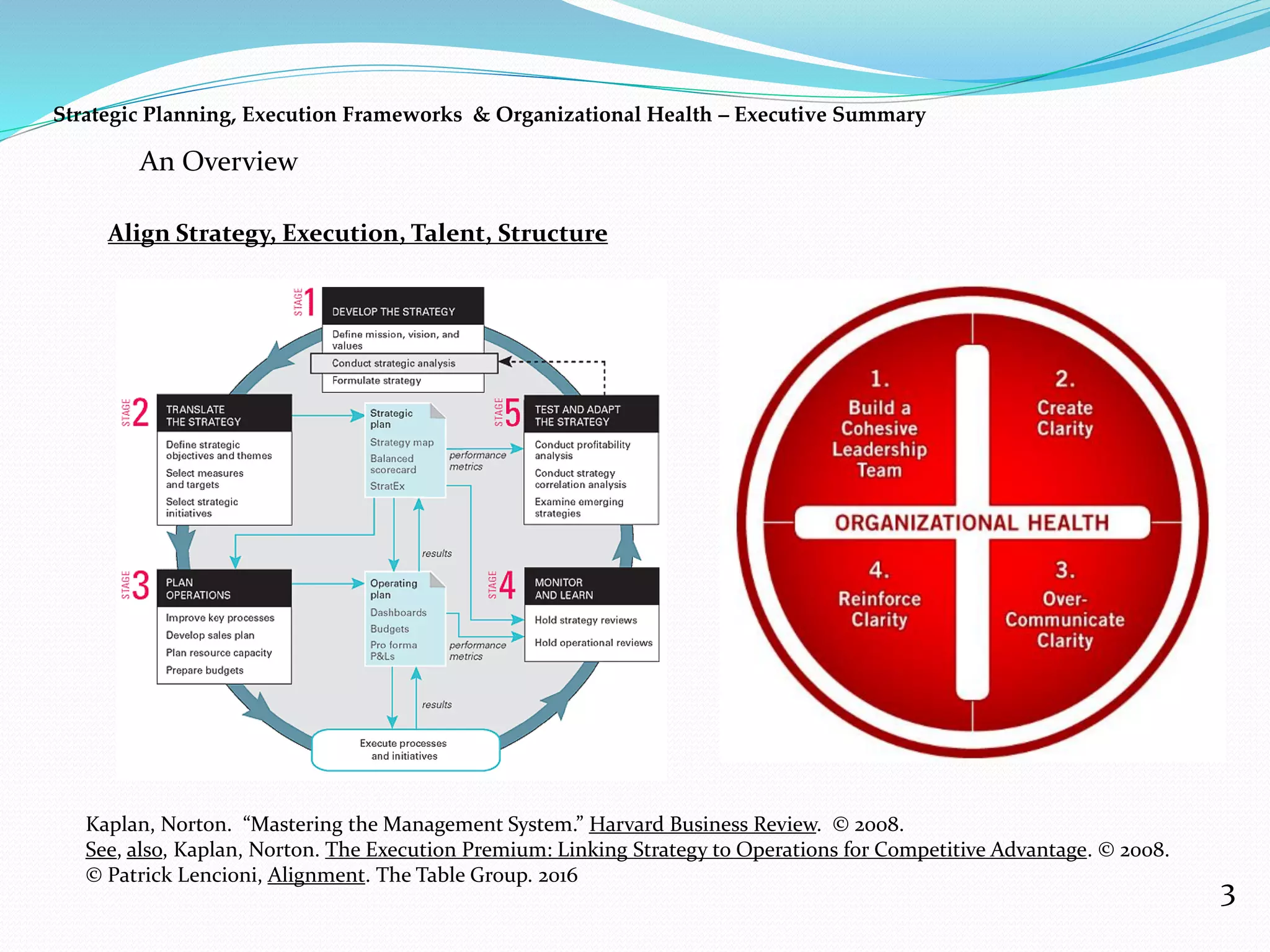
Organizational health is an organization’s ability to perform effectively, adapt to change, support employee well-being, and remain viable over time. [1] [2]
The concept applies to organizations seeking sustainable performance rather than short-term output alone. It treats health as a systemic condition involving culture, structures, leadership, team functioning, employee experience, and the organization’s capacity to respond to environmental change. [1] [2] Unlike a narrow productivity measure, organizational health connects goal achievement with adaptability, meaningful work, job satisfaction, manageable absence, and supportive working conditions. [2] [3]
flowchart TD O["Organizational health"] O --> S["Organizational conditions"] O --> W["Workplace and team functioning"] O --> I["Individual experience"] S --> S1["Clear objectives"] S --> S2["Managerial support"] S --> S3["Adequate working conditions"] W --> W1["Team capability"] W --> W2["Team stability"] I --> I1["Job satisfaction"] I --> I2["Development opportunities"] I --> I3["Low sickness absence"] S --> R["Effective performance and adaptation"] W --> R I --> R

Uses in Context

  • Management diagnosis: Leaders use organizational health to assess whether structures, objectives, managerial support, and working conditions enable employees and teams to perform effectively. [2]
  • Human Resources strategy: The term frames employee well-being as connected to productivity, retention, development, and long-term organizational viability rather than as a separate benefits program. [1] [3]
  • Organizational development: Researchers and practitioners use it to examine whether an organization can “cope with problems” and continue developing its capabilities in changing environments. [1] [4]
  • Workplace measurement: Organizational health can be operationalized through indicators such as team stability, sickness absence, job satisfaction, development opportunities, and perceived productivity loss. [2]
  • Public-sector evaluation: In public workplaces, the concept is applied across organizational, workplace, and individual levels rather than reduced to an individual wellness score. [2]
  • Well-being programs: Employers invoke organizational health when integrating mental, physical, social, financial, and environmental dimensions of employee well-being into organizational policy. [5] [6]

History of Use

Origins

  • Matthew B. Miles helped establish organizational health as an organizational-development concept. In the formulation reported in later scholarship, a healthy organization can sustain its life in its environment, continually develop, cope with problems, and build the capacity to perform those functions. [1] [4]
  • The concept emerged in management, organizational-development, human-resource-management, and industrial-psychology research as a way to describe organizational vitality and effectiveness together. [1] [3]

Evolution

  • 1960s–1970s: Organizational health was associated with organizational development and the capacity of organizations to survive, adapt, solve problems, and continue learning rather than merely maintain existing routines. [1] [4]
  • Later organizational research: The concept expanded from a primarily organization-level idea into a multidimensional construct involving cultural, structural, behavioral, workplace, team, and individual conditions. [1] [2]
  • 2020s: Contemporary research increasingly operationalizes organizational health through measurable combinations of organizational preconditions, team capability and stability, employee well-being, job satisfaction, development opportunities, sickness absence, and productivity loss. [2] [3]

Best Real-World Examples

  • TELUS well-being blueprint — a multidimensional well-being strategy linking infrastructure, leadership, psychological safety, and targeted programs with engagement, disability, mental-health, and retention outcomes. [5]
  • Tapestry Mental Health First Aid program — an example of embedding mental-health capability across corporate, creative, fulfillment, and retail roles. [7]
  • Sierra Nevada and Calm — a distributed-workforce response that made mental-health resources available across locations, comfort levels, backgrounds, and individual needs. [8]
  • Starbucks Mexico well-being initiative — a case of strengthening employee assistance through a more proactive model organized around mental, physical, and financial well-being. [6]
  • Bain Wellbeing at Bain — an example of expanding an internal well-being initiative into a globally embedded organizational program. [9]
  • Organizational-health factor-structure research — a research example treating organizational health as overall organizational condition, effectiveness, sustainability, functionality, and adaptability. [3]

Case Studies

TELUS. TELUS developed a structured well-being blueprint based on organizational infrastructure, awareness, targeted programming, psychological-safety commitments, leader training, and a five-dimensional view of health encompassing physical, psychological, social, environmental, and financial dimensions. [5] The organization reported placement in the top 10% globally for employee engagement, reductions in short-term-disability claims across four consecutive periods, reductions in mental-health claims across five consecutive years, and stronger recruitment and retention. [5] The case illustrates the organizational-health principle that employee well-being becomes strategically significant when supported by systems, leadership practices, measurement, and sustained implementation rather than isolated benefits. [5]
Tapestry. Tapestry began introducing Mental Health First Aid for corporate teams at kate spade new york in 2018 and later extended the approach to retail through a retail-specific program in 2023. [7] Nearly 1,000 employees completed the training, and all surveyed participants reported feeling better equipped to support someone experiencing a mental-health challenge. [7] The case shows how organizational health can be built through distributed capability: employees across brands, departments, and job functions receive shared language and practical skills, strengthening everyday support and connection across the organization. [7]
Sierra Nevada. Sierra Nevada faced the challenge of maintaining a robust well-being culture after moving to a distributed, fully remote organization during the pandemic. [8] The company partnered with Calm to provide employees with mental-health resources and tools accessible across locations and adaptable to differing comfort levels, backgrounds, and individual needs. [8] The case demonstrates that organizational health is context-sensitive: a practice designed for a colocated workforce may need to be redesigned around accessibility, distributed work, and psychological inclusion when the organization’s operating environment changes. [2] [8]

Sources

[1] 2025, Dec 02. pmc.ncbi.nlm.nih.gov . Development and validation of the organizational health ... . Updated: 2026, Nov 04. Generated: 2026, Nov 14. Perplexity API response.

[2] 2026, Jun 30. frontiersin.org . Organizational health in public-sector workplaces: a mixed- ... . Updated: 2026, Aug 01. Generated: 2026, Nov 14. Perplexity API response.

[3] 2025, Nov 21. pmc.ncbi.nlm.nih.gov . Dataset on the exploratory factor structure of organizational health ... . Updated: 2026, Oct 20. Generated: 2026, Nov 14. Perplexity API response.

[4] 2025, Dec 02. public-pages-files-2025.frontiersin.org . xml . Generated: 2026, Nov 14. Perplexity API response.

[5] 2026, Sep 28. telushealth.com . The TELUS well-being blueprint - TELUS Health . Updated: 2026, Oct 07. Generated: 2026, Nov 14. Perplexity API response.

[6] 2026, Sep 23. telushealth.com . Case study - Starbucks Mexico | TELUS Health . Updated: 2026, Nov 02. Generated: 2026, Nov 14. Perplexity API response.

[8] 2026, Jan 13. health.calm.com . Sierra Nevada Prioritizes Mental Health with Use of Calm . Updated: 2026, Oct 29. Generated: 2026, Nov 14. Perplexity API response.

[9] 2026, Sep 21. bain.com . Growing an internal wellbeing initiative into an award-winning global program . Updated: 2026, Nov 02. Generated: 2026, Nov 14. Perplexity API response.

[10] 2026, May 29. linkedin.com . Client Case Study - Bentley Motors | Westfield Health - LinkedIn . Updated: 2026, Aug 28. Generated: 2026, Nov 14. Perplexity API response.