


Role Clarity
Defining and Describing Role Clarity
Uses in Context
- Management: Leaders use role clarity to specify “who owns what, the decision, the delivery, the sign-off.” [5]
- Performance management: Managers define expected outcomes, decision boundaries, and standards distinguishing adequate from excellent work. [3]
- Hybrid Work : Researchers examine whether remote-work frequency changes the relationship between role clarity, engagement, and anxiety. [1]
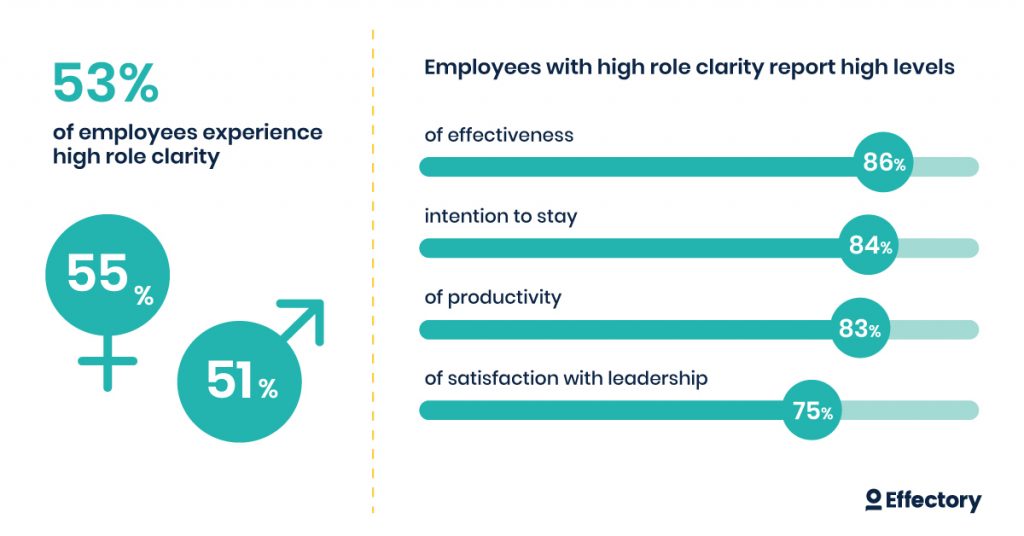
- Employee experience: Role clarity is invoked to describe confidence that a person understands how they are expected to perform a job. [7]
History of Use
Origins
- The intellectual roots of role clarity lie in mid-century organizational research on role ambiguity , defined as inadequate information about role requirements, responsibilities, and performance expectations. [4]
- Daniel Katz and Robert Kahn’s organizational-behavior tradition helped establish roles and role expectations as central features of organizational systems; later summaries identify their 1964 work as introducing role ambiguity as a formal construct. [4]
- John Rizzo, Robert House, and Sidney Lirtzman operationalized the concept in their 1970 study, Role Conflict and Ambiguity in Complex Organizations , developing separate measures for role ambiguity and role conflict. [5]
Evolution
- 1964 — Formal organizational construct: Role ambiguity was framed as a problem of insufficient information available to organizational members about role requirements, responsibilities, and performance expectations. [4]
- 1970 — Measurement and differentiation: Rizzo, House, and Lirtzman’s questionnaire treated role ambiguity and role conflict as related but statistically separable constructs. [5]
Best Real-World Examples
- GitLab Handbook — documents responsibilities, decision rights, and distributed-work practices in an all-remote organization.
- Basecamp Shape Up — exemplifies explicit scopes, appetites, and ownership for product work.
- Atlassian Team Playbook — turns role and responsibility alignment into reusable team exercises.
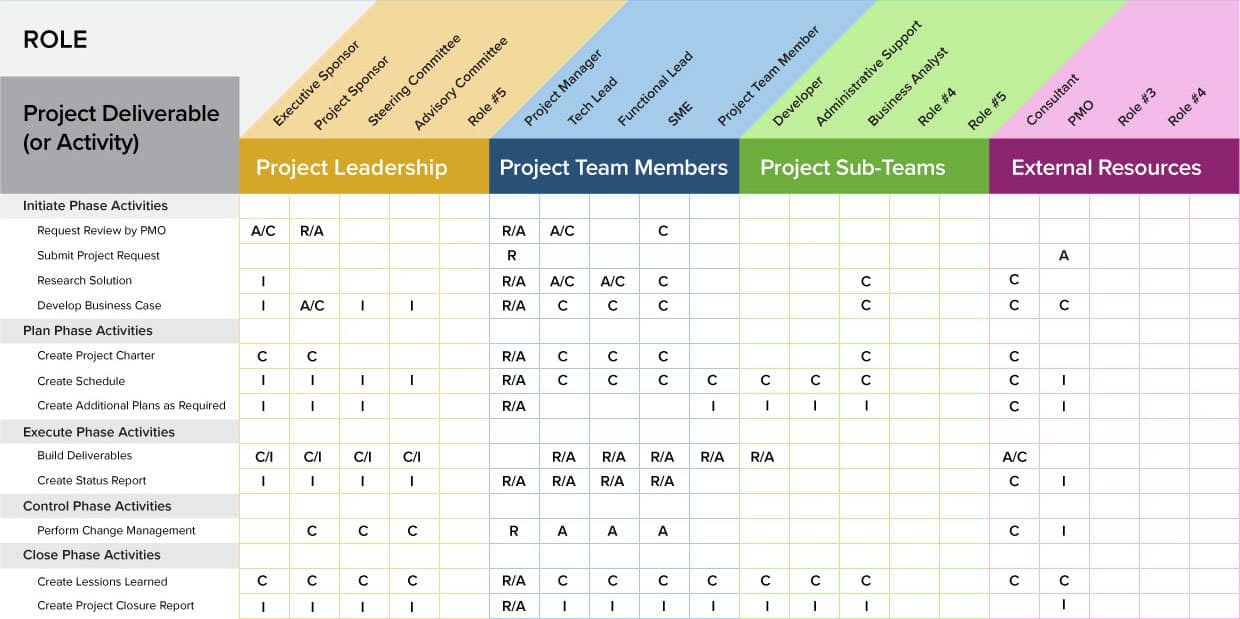
- RACI matrix — makes responsibility, accountability, consultation, and information flows explicit.
- Holacracy — formalizes roles as accountabilities and domains rather than relying solely on conventional job titles.
- OpenProject — provides open-source project-management structures for assigning work and clarifying ownership.
- Role Conflict and Ambiguity in Complex Organizations — supplies the foundational measurement model separating ambiguity from conflict.
Case Studies
Images


Sources
[1] 2026, Sep 02. link.springer.com . Job characteristics, coping strategies, and employee well-being in hybrid work: the role of remote work frequency - Current Psychology . Updated: 2026, Oct 21. Generated: 2026, Nov 14. Perplexity API response.
[2] 2026, Mar 12. academia.edu . clarity as the execution multiplier: organizational focus, strategic ... . Updated: 2026, Apr 09. Generated: 2026, Nov 14. Perplexity API response.
[3] 2026, Jul 01. evanslearninglabs.com . Role Clarity and the Hidden Cost of Ambiguity | Evans ... . Updated: 2026, Oct 20. Generated: 2026, Nov 14. Perplexity API response.
[4] 2026, Jul 01. evanslearninglabs.com . What Role Clarity Does for Performance | Evans Learning Labs . Updated: 2026, Oct 21. Generated: 2026, Nov 14. Perplexity API response.
[5] 2026, Jun 14. leadersloop.com . Role & expectation clarity, explained simply . Updated: 2026, Oct 14. Generated: 2026, Nov 14. Perplexity API response.
[6] 2025, Dec 08. studocu.com . BTM536 Case Study 1: EcoWave Stress Management & Wellbeing Issues . Updated: 2026, Mar 13. Generated: 2026, Nov 14. Perplexity API response.
[7] 2026, Apr 20. scribd.com . Service Quality From the Lenses of Role Clarity 2015 Procedia ... . Generated: 2026, Nov 14. Perplexity API response.
[8] 2026, Jun 11. newmanhumanresources.com . Role Clarity and Goal-Setting — Research and Evidence . Updated: 2026, Oct 08. Generated: 2026, Nov 14. Perplexity API response.
[9] 2026, Jul 04. orgchartstudio.com . The work between the boxes: Why ownership gets lost on ... . Updated: 2026, Sep 22. Generated: 2026, Nov 14. Perplexity API response.
[10] 2026, Nov 08. scribd.com . Rizzo RoleConflictAmbiguity 1970 | PDF | Sampling (Statistics) . Generated: 2026, Nov 14. Perplexity API response.