


Video Annotation
Defining and Describing Video Annotation
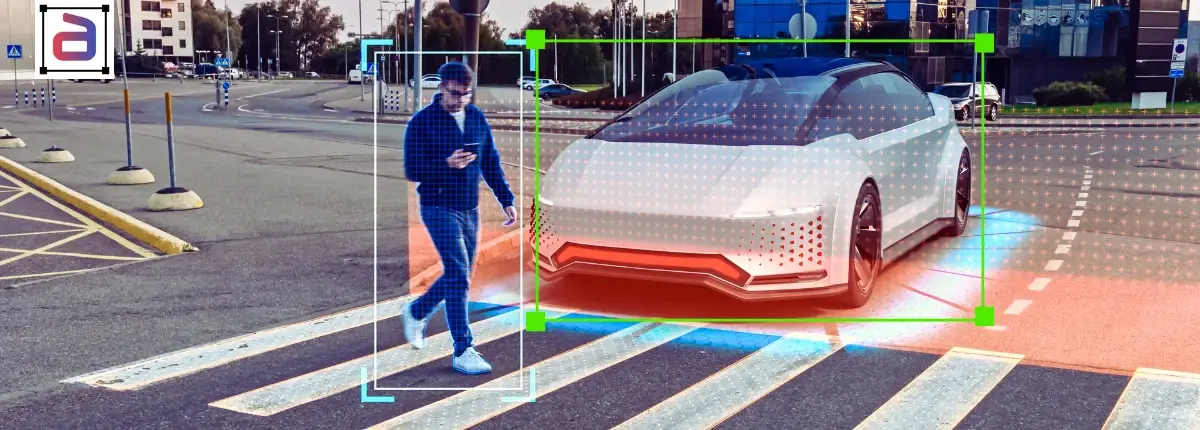
- The term applies when a team converts raw video into machine-readable training or evaluation data, typically by marking objects frame by frame, tracking identities over time, or labeling actions and events. [1] [2] It does not mean merely adding captions, subtitles, or editorial notes for human viewers. Innovation consultants care because annotation is a strategic bottleneck: its cost, quality, ontology, privacy implications, and workflow design can determine whether a computer-vision product reaches reliable deployment. [2] [3]
Disambiguation
Primary sense — the innovation-consulting sense
- In startup decisions, the relevant question is not simply “Which annotation tool should be bought?” but “Which labeling ontology, human-review process, automation strategy, and data-governance model best supports the product’s learning loop?” Annotation tools commonly include ingestion, labeling, quality assurance, collaboration, and export workflows. [5]
Other senses
1. Training-data production
- For founders, the strategic trade-off is speed and cost versus label consistency, domain expertise, security, and defensibility of the resulting dataset. [3]
2. Human-facing video description
- This sense serves human readers or viewers rather than primarily producing computer-vision ground truth.
- It should not be confused with machine-learning annotation unless the annotations are structured for model training or evaluation.
Etymology and Origin
- “Video annotation” is a compositional term: video identifies the temporal medium, while annotation means adding structured labels or explanatory information. The available sources describe the practice as an extension of image annotation across temporal sequences rather than attributing the phrase to a single identifiable inventor. [2] [3]
Adjacent Vocabulary
- Synonyms :
- Video labeling — plainer wording, often used interchangeably with video annotation.
- Computer-vision annotation — broader and more technical; may include images, video, and 3D sensor data.
- Training-data labeling — emphasizes the dataset-production function rather than the video medium.
-
- Antonyms :
- Unlabeled video — raw footage without structured labels.
- Unsupervised learning — a modeling approach that does not depend on conventional manually labeled targets.
-
- Adjacent terms : Computer Vision · Ground Truth · Training Data · Active Learning · Human-in-the-Loop · Data Flywheel
Usage in Practice
- A practical definition describes the workflow as drawing and storing “labels on video frames” to produce “the ground-truth dataset a computer-vision model trains on.” [2]
- Annotation teams may “track vehicles, identify human activities, mark events, or maintain consistent object identities across frames.” [1]
- In autonomous-driving applications, annotation helps systems detect and track “vehicles, pedestrians, and obstacles across video frames.” [6]
- Business applications include “customer movement and engagement” analysis intended to optimize store layouts and shopper experiences. [6]
- Video annotation is described as labeling “objects, actions, movements, events, and environmental contexts frame by frame.” [4]
- A strategic account of the practice calls data annotation “a business decision, not just a technical one,” emphasizing its role in enterprise AI economics and deployment. [3]
Common Misuses
- Calling subtitles, transcripts, or marketing captions “video annotation” when the work does not create structured labels for analysis or model development. Better term: Captioning or AI Transcription .
- Calling a dashboard that detects objects “video annotation” when it only consumes already-labeled data. Better term: Video Analytics or Computer Vision Inference .
- Treating a few manually tagged demonstration clips as a complete annotation strategy. Better term: Pilot Dataset or Proof of Concept unless the dataset has a defined ontology, coverage plan, and quality-control process.
- Using “AI-powered annotation” to imply full automation when humans still define labels, resolve ambiguous cases, and audit model-generated annotations. Better term: Model Assisted Labeling or Human in the Loop Annotation .
Sources
[1] 2026, Oct 23. cloudpano.com . Data Annotation Services: The Complete Buyer's Guide - CloudPano . Updated: 2026, Nov 07. Generated: 2026, Nov 07. Perplexity API response.
[2] 2026, Jul 17. forasoft.com . Video Annotation Tool: Build vs Buy for CV Teams 2026 . Updated: 2026, Nov 03. Generated: 2026, Nov 07. Perplexity API response.
[3] 2026, May 07. infomineo.com . Data Annotation: The Strategic Foundation of Enterprise AI | Infomineo . Updated: 2026, Oct 26. Generated: 2026, Nov 07. Perplexity API response.
[4] 2026, May 15. annotera.ai . www.annotera.ai › blog › scale-video-annotationScaling Video Annotation for Massive CV Datasets - annotera.ai . Updated: 2026, Nov 06. Generated: 2026, Nov 07. Perplexity API response.
[5] 2026, Apr 19. gigabpo.com . Best Computer Vision Annotation Tools: The 2026 Practical ... . Updated: 2026, Nov 02. Generated: 2026, Nov 07. Perplexity API response.
[6] 2026, Jul 30. digitaldividedata.com . Video Annotation Services For AI & Computer Vision | DDD . Updated: 2026, Oct 27. Generated: 2026, Nov 07. Perplexity API response.
[7] 2026, Aug 11. innodata.com . Image, Video, + Sensor Data Annotation — Innodata . Updated: 2026, Nov 05. Generated: 2026, Nov 07. Perplexity API response.
[8] 2025, Nov 28. vafromeurope.com . AI Data Annotation & AI Operations Support Services . Updated: 2026, Oct 26. Generated: 2026, Nov 07. Perplexity API response.
[9] 2026, Jul 30. datastackhub.com . 10 Best Label Studio Alternatives and Competitors (2026) . Updated: 2026, Oct 30. Generated: 2026, Nov 07. Perplexity API response.
[10] 2026, Jul 24. annotera.ai . Building Action Recognition Models with Video Annotation - Annotera . Updated: 2026, Oct 29. Generated: 2026, Nov 07. Perplexity API response.