


Workflow Orchestration
Defining and Describing Workflow Orchestration
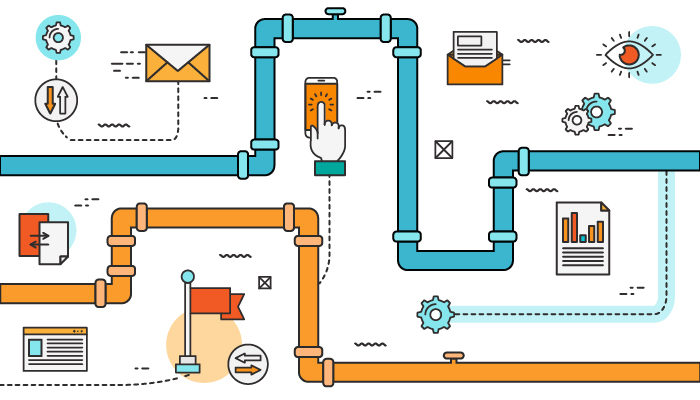
- Workflow orchestration turns a collection of separate actions into one observable, recoverable process.
- In data engineering, workflows are often represented as directed acyclic graphs, or DAGs, in which nodes are tasks and edges express dependencies. [1] In newer agentic-AI systems, orchestration is increasingly discussed as a way to coordinate agents and tools while preserving an explicit execution model. [5] [6]
Uses in Context
- Enterprise governance: Organizations invoke orchestration to emphasize auditability, scheduling, environment separation, and control across complex workflows. [8]
History of Use
Origins
- The broader workflow concept predates the modern phrase “workflow orchestration.” The Workflow Management Coalition’s 1996 glossary defined workflow as “the automation of a business process, in whole or part,” in which documents, information, or tasks move between participants according to procedural rules. [2]
- The modern orchestration vocabulary was strongly shaped by web-services research. Chris Peltz’s 2003 IEEE Computer article distinguished orchestration—an executable process controlled by one party—from choreography, in which participants coordinate without a single central conductor. [6]
- There is no reliably documented single inventor or first paper for the narrower modern usage of “workflow orchestration” in data and platform engineering; the term was repurposed as workflow tools became prominent from roughly 2014 onward. [2]
Evolution
- 1993–1996 — Workflow standardization: The Workflow Management Coalition emerged as a standards body, and its glossary formalized workflow as rule-based business-process automation. [2]
- 2003 — Web-services orchestration: Peltz’s orchestration-versus-choreography distinction established the influential idea of an executable process with a coordinating owner. [6]
- 2010s–2020s — Data and platform engineering: Open-source systems such as Apache Airflow popularized DAG-based orchestration for scheduled and triggered data pipelines; Airflow was originally developed at Airbnb for scheduling and monitoring those pipelines. [1] [7]
- 2020s — Agentic Workflows : Research and industry practice began extending workflow ideas toward autonomous or Multi-Agent Systems , with state machines providing a common execution foundation for traditional workflows and AI agents. [5]
Best Real-World Examples
- Apache Airflow — Apache Airflow — an open-source orchestrator that represents workflows as DAGs of dependent tasks. [1] [7]
- Orkes Conductor — Orkes — an orchestration layer used to schedule, coordinate, and audit complex application flows. [8]
- Workflow Management Coalition — an early standards community that helped formalize workflow interoperability and terminology. [2]
- Agentic scientific workflows — a research direction that unifies conventional workflows and AI agents through state-machine execution. [5]
Case Studies
Sources
[1] 2026, Oct 03. glossary.cloud . What is workflow orchestration? . Updated: 2026, Nov 13. Generated: 2026, Nov 14. Perplexity API response.
[2] 2026, Oct 04. getorchestra.io . The Complete Guide to Workflow Orchestration Platforms . Updated: 2026, Oct 05. Generated: 2026, Nov 14. Perplexity API response.
[3] 2026, Jun 03. wrike.com . Workflow orchestration tools: The 7 best options in 2026 . Updated: 2026, Oct 27. Generated: 2026, Nov 14. Perplexity API response.
[4] 2026, Oct 27. workflowengine.io . What Is Workflow Orchestration and How It Works · Optimajet - Workflow Engine . Updated: 2026, Nov 02. Generated: 2026, Nov 14. Perplexity API response.
[5] 2025, Nov 15. dl.acm.org . The (R)evolution of Scientific Workflows in the Agentic AI Era . Updated: 2026, Nov 04. Generated: 2026, Nov 14. Perplexity API response.
[6] 2026, Nov 01. getorchestra.io . Multi-Agent Orchestration: Everything You Need to Know | Orchestra . Updated: 2026, Nov 06. Generated: 2026, Nov 14. Perplexity API response.
[7] 2026, Oct 07. domo-webflow.domo.com . Workflow Orchestration Guide: Tools, Patterns, Models . Updated: 2026, Nov 06. Generated: 2026, Nov 14. Perplexity API response.
[8] 2026, Oct 15. orkes.io . Orkes Case Study | Stepwork . Updated: 2026, Oct 22. Generated: 2026, Nov 14. Perplexity API response.
[9] 2026, Sep 22. kestra.io . Unified Orchestration: Definition, Requirements, & Benefits . Updated: 2026, Nov 04. Generated: 2026, Nov 14. Perplexity API response.
[10] 2026, Apr 24. github.com . What is Workflow Orchestration? · GitHub . Updated: 2026, Oct 08. Generated: 2026, Nov 14. Perplexity API response.