


The world's open source leader
(2025-08-28T17:56.836Z)
Perplexity Query
(2025-08-28T17:56
.836Z)
Question:
Write a comprehensive one-page article about "RedHat Linux".
Response from sonar-pro:
Red Hat Enterprise Linux (RHEL) is a leading commercial Linux distribution developed by Red Hat, Inc., an IBM subsidiary.
[1juguo]
[fdtku7]
As a foundational operating system for businesses worldwide, RHEL is designed to deliver reliability, scalability, and security, making it essential for powering everything from enterprise servers to cloud-native workloads.
[b9um32]
[nf8gpa]
Its significance lies in providing a consistent, production-ready platform trusted by organizations across industries.
Main Content
At its core, Red Hat Enterprise Linux operates on open-source principles, meaning users have access to its source code for customization and integration, but the commercial distribution itself is licensed and supported.
[1juguo]
RHEL supports a wide range of hardware architectures—including x86-64, ARM64, Power ISA, and IBM Z—reflecting its versatility in data centers and cloud environments alike.
[1juguo]
[nf8gpa]
Businesses can run RHEL on-premises, in public or private clouds, or as part of hybrid architectures, leveraging certified integration with major providers such as Amazon Web Services, Google Cloud Platform, and Microsoft Azure.
[nf8gpa]
Practical applications of RHEL span various domains. In finance, banks use RHEL for secure, high-availability transaction processing. E-commerce platforms rely on its robust security features and streamlined update management. In research and academia, high-performance clusters powered by RHEL support complex computational workloads. The platform’s certified compatibility with thousands of vendors and software stacks enables rapid deployment of databases, container orchestration (with Kubernetes and OpenShift), and virtualization solutions.
[b9um32]
[1juguo]
Key benefits of RHEL include:
- Stability: Rigorous testing and a predictable release cycle ensure reliability for mission-critical operations.
- Security: Advanced security controls, proactive patching, and compliance with standards such as NIST and PCI DSS.
- Support and Ecosystem: Access to expert support, training, and extensive documentation through Red Hat’s global network.
- Development Tools: Integrated management consoles, image building tools, and developer-friendly application streams for Python, .NET, and more. [nf8gpa]
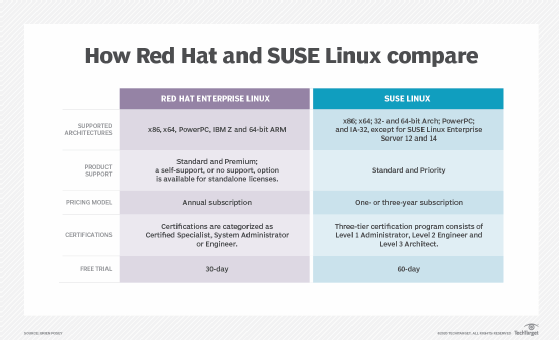
However, RHEL’s commercial licensing and support model can be a consideration for small organizations or individual users, who may look to alternatives derived from its source code, such as AlmaLinux or Rocky Linux.
[1juguo]
Additionally, managing complex deployments and keeping up with rapid innovation in open-source technologies can demand specialized expertise.
[b9um32]
Current State and Trends
RHEL remains the benchmark for enterprise Linux deployments, with substantial adoption in financial services, telecommunications, healthcare, and public sector environments.
[b9um32]
[nf8gpa]
Following IBM’s acquisition of Red Hat in 2019, RHEL’s prominence in hybrid cloud and AI-focused workloads has increased.
[fdtku7]
Recent releases, such as RHEL 10 announced in May 2025, introduce innovations like RHEL image mode for immutable, bootable OS containers and post-quantum cryptography protection, addressing emerging cybersecurity challenges.
[b96y0f]
The integration of Red Hat Enterprise Linux Lightspeed brings generative AI to the RHEL command line, offering intelligent, context-aware assistance to system administrators.
[b96y0f]
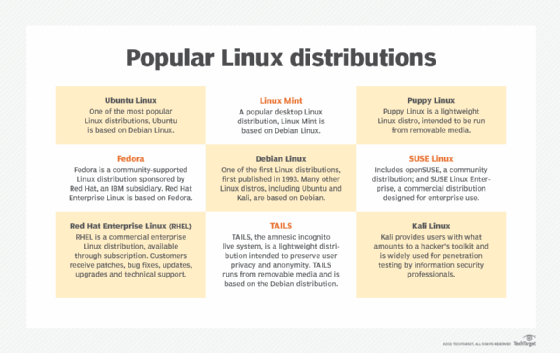
The RHEL ecosystem also includes upstream projects like Fedora and CentOS Stream, which serve as innovation testbeds feeding features into RHEL’s stable releases.
[1juguo]
Derivative distributions developed by third parties, such as Oracle Linux, AlmaLinux, and Rocky Linux, offer binary compatibility for organizations seeking alternative support models.
[1juguo]
Future Outlook
The future of RHEL is marked by continued growth in hybrid cloud, AI, and quantum computing workloads, driven by advancements in security (such as post-quantum cryptography) and increased automation through AI-enabled management tools.
[b96y0f]
[nf8gpa]
With ongoing collaborations among hardware, cloud, and software partners, RHEL is likely to remain at the heart of enterprise IT strategies, enabling organizations to innovate securely and at scale.
Conclusion
Red Hat Enterprise Linux combines open-source flexibility with enterprise-grade support, powering critical infrastructure worldwide and shaping the future of IT. Its evolution toward AI, cloud-native, and quantum-ready platforms positions RHEL as a key enabler of tomorrow’s digital transformation.
Citations
[b9um32] 2025, Jun 16. What is Red Hat Enterprise Linux (RHEL) and how is it used?. Published: 2022-03-23 | Updated: 2025-06-16
[1juguo] 2025, Aug 21. Red Hat Enterprise Linux. Published: 2004-03-27 | Updated: 2025-08-21
[b96y0f] 2025, Aug 28. Everything we announced at Red Hat Summit 2025. Published: 2025-05-28 | Updated: 2025-08-28
[nf8gpa] 2025, Aug 20. Red Hat Enterprise Linux. Published: 2025-08-20 | Updated: 2025-08-20