


Wyss Institute
Wyss Institute at Harvard
-
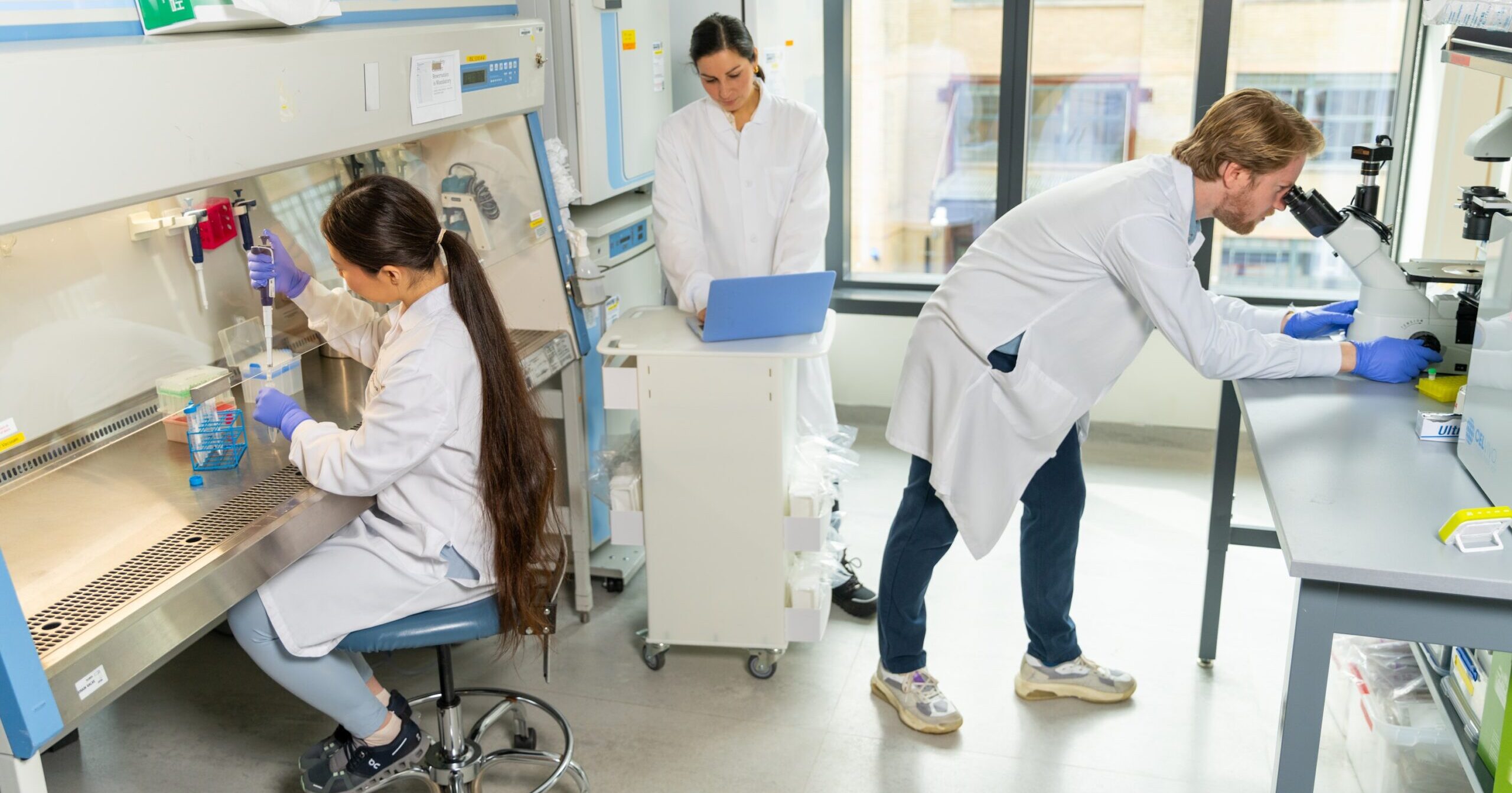
- A Harvard-affiliated nonprofit research and development institute that turns biologically inspired science into technologies for human and planetary health.
- The Wyss Institute at Harvard University is a nonprofit research and development organization founded in 2009.[6] It operates in the Boston–Cambridge research ecosystem through collaborations with Harvard University, Harvard Medical School, Boston Children’s Hospital, and external partners.[6][8] Innovation consultants track it for its translational pipeline, which moves discoveries from academic laboratories toward real-world products and therapies.[6]
Identity and Form
- Type: This organization is a research institute.
- Legal form and jurisdiction: It is a nonprofit research and development organization at Harvard University; no separate incorporation jurisdiction or public ticker is identified in the available sources.[6]
- Headquarters and presence: Boston, Massachusetts; its work is geographically concentrated in the Harvard-affiliated Boston–Cambridge ecosystem but includes global research and funding collaborations.[6][9]
- Size: No reliable source found for a current institute-wide headcount.
Mission and Identity
- Operating principle: Use biologically inspired engineering and collaborative research to convert laboratory discoveries into real-world solutions.[6]
What They Do
- Organ-on-chip research: Human Organ on a Chip Technology systems for modeling disease and testing therapies, including Lyme disease research.[8]
- 3D Organs engineering: Biological inks and multimaterial 3D printing for vascularized tissues and organoids.[6]
- DNA nanotechnology: DNA nanoswitch platforms for drug discovery and protein-interaction screening.[10]
- Precision Diagnostics : Extracellular-vesicle methods intended to reveal biomarkers from brain and nervous-system cells.[9]
- Sustainable materials and Biomanufacturing : Microbial systems designed to convert plastic waste into bioplastics.[5]
- Biomedical device and therapeutic development: Research spanning cancer therapies, neurological disease, cardiovascular disease, and other health applications.[6][7]
Leadership and People
- Donald Ingber — founding director — also holds professorships at Harvard Medical School, Boston Children’s Hospital, and Harvard’s John A. Paulson School of Engineering and Applied Sciences.[9][10]
- Jennifer Lewis — core faculty member and leader of the 3D Organ Engineering Initiative — recognized for work in 3D bioprinting, vascularized organoids, and human tissues.[6]
- Ernest Aguinam — researcher associated with immune-system research addressing radiation injury and chronic Lyme disease.[2]
- Silvi Lybbert — researcher working on the SPEEDR plastic-degradation and bioplastic project.[5]
History and Origin Story
- 2009 — The Wyss Institute was founded at Harvard University.[6]
- 2025–2026 — Bay Area Lyme Foundation funding enabled a Wyss project using personalized Lymphoid Organ Chips to investigate Lyme disease therapeutics.[8]
- 2026 — Jennifer Lewis was elected to the National Academy of Medicine for contributions to 3D bioprinting and engineered human tissues.[6]
- 2026 — The institute’s FIND DNA-nanoswitch drug-discovery technology was licensed to a startup co-founded by members of the research team.[10]
- 2026 — Wyss researchers reported a framework for isolating neuron-specific extracellular vesicles to support neurological biomarkers and precision diagnostics.[9]
Financials and Funding
- Bay Area Lyme Foundation supported a year of Lyme disease research.[8]
- The Lyme project was originally funded by Northpond Ventures.[8]
- FIND received support from the NIH, Takeda Pharmaceuticals, the Arnold and Mabel Beckman Foundation, the Smith Family, the Deutsche Forschungsgemeinschaft, and other funders.[10]
- The extracellular-vesicle work received support from NIH, Howard Hughes Medical Institute, the Klarman Cell Observatory, the Chan Zuckerberg Initiative Neurodegeneration Challenge Network, Open Philanthropy Project /Good Ventures, and Wellcome Leap.[9]
- No reliable source found for an institute-wide annual budget or endowment figure.
Milestones and Signature Output
- Organ Chips for disease modeling — 2010s–2026 — human Organ Chip platforms model disease biology and therapeutic responses, including personalized immune responses in Lyme disease.[8]
- 3D bioprinting of living tissues — 2010s–2026 — Jennifer Lewis’s work advanced biological inks, vascularized organoids, and multimaterial printing for drug discovery, disease modeling, and tissue repair.[6]
- FIND DNA-nanoswitch platform — 2026 — screens molecules according to their effects on protein–protein interactions and was licensed to a startup.[10]
- Neuron-specific extracellular-vesicle isolation — 2026 — enables researchers to examine biomarker-loaded vesicles originating from brain cells in blood and cerebrospinal fluid.[9]
- SPEEDR bioplastic system — 2025–2026 — engineers a microbe to break down plastic waste and use resulting byproducts to make bioplastics.[5]
- Translational health and sustainability pipeline — since 2009 — the institute reports a portfolio ranging from cancer therapies to sustainable materials.[6]
Ecosystem and Relationships
- Harvard University — institutional home of the Wyss Institute.[6]
- Harvard Medical School — clinical and biomedical research partner; Donald Ingber holds a Harvard Medical School professorship.[9]
- Boston Children’s Hospital — research and funding collaborator on biomedical projects.[9][10]
- National Institutes of Health — major public research funder for Wyss-linked projects.[9][10]
- Bay Area Lyme Foundation — supporter of the institute’s Lyme disease research.[8]
- Takeda Pharmaceuticals — industry supporter of the FIND Drug Discovery .[10]
Recent Developments
- November 5, 2026 — Wyss researchers and collaborators reported FIND, a DNA-nanoswitch drug-discovery platform, and disclosed that the technology had been licensed to a newly formed startup.[10]
- October 30, 2026 — Bay Area Lyme Foundation funding enabled continued Wyss research using personalized Lymphoid Organ Chips to investigate Lyme disease therapies.[8]
- October 29, 2026 — Wyss researcher Silvi Lybbert described the SPEEDR project, which targets plastic degradation and bioplastic production in a single engineered microbe.[5]
- October 28, 2026 — Wyss researchers reported methods for isolating neuron-specific extracellular vesicles as potential sources of neurological biomarkers.[9]
- October 26, 2026 — Core Faculty member Jennifer Lewis was elected to the National Academy of Medicine.[6]
Impact
- Impact on society
- The institute’s Organ Chip research is aimed at improving understanding and treatment of Lyme disease by comparing immune responses from different patient donors.[8]
- Its neurological extracellular-vesicle work could support earlier disease detection and treatment monitoring by exposing molecular signals from brain cells through blood or cerebrospinal-fluid samples.[9]
-
- Impact on innovation
- The Wyss helped establish a translational model that combines biologically inspired engineering, human-relevant disease models, and commercialization partnerships.[6][8]
- Its research has produced platforms spanning organ chips, living-tissue bioprinting, DNA nanoswitch screening, and biomarker isolation.[6][8][9][10]
-
- Impact on its industry or domain
- Organ Chips offer a human-cell-based approach to studying disease and therapeutic response, while the FIND platform shifts drug screening toward functional effects on protein interactions rather than simple target binding.[8][10]
- The institute’s 3D bioprinting work has expanded the technical possibilities for vascularized organoids and engineered human tissues.[6]
-
- Historical significance
- Since its 2009 founding, the Wyss has become a prominent Harvard-based example of an academic research institute explicitly organized around translating discoveries into products, therapies, and other real-world applications.[6]
-
- Criticisms and controversies
- No substantive, credible outside criticism or settled controversy was identified in the available sources.
-
Adjacent Entries
- Harvard Medical School
- Boston Children’s Hospital
- Organ on a Chip Technology
- 3D Bioprinting
- DNA Nanotechnology
Sources
[1] 2026, Oct 30. wyss.harvard.edu . Application Area: Personalized Medicine . Updated: 2026, Nov 06. Generated: 2026, Nov 14. Perplexity API response.
[2] 2026, Oct 29. wyss.harvard.edu . Category: Community . Updated: 2026, Nov 07. Generated: 2026, Nov 14. Perplexity API response.
[3] 2026, Oct 26. wyss.harvard.edu . Application Area: Manufacturing . Updated: 2026, Nov 09. Generated: 2026, Nov 14. Perplexity API response.
[4] 2026, Nov 05. wyss.harvard.edu . Publications . Updated: 2026, Nov 14. Generated: 2026, Nov 14. Perplexity API response.
[5] 2026, Oct 29. wyss.harvard.edu . Silvi Lybbert on turning plastic trash into bioplastic treasure . Updated: 2026, Nov 07. Generated: 2026, Nov 14. Perplexity API response.
[6] 2026, Oct 26. wyss.harvard.edu . Wyss Institute Core Faculty member Jennifer Lewis elected to the ... . Updated: 2026, Nov 07. Generated: 2026, Nov 14. Perplexity API response.
[7] 2026, Oct 26. wyss.harvard.edu . Application Area: Heart Disease . Updated: 2026, Nov 07. Generated: 2026, Nov 14. Perplexity API response.
[8] 2026, Oct 30. wyss.harvard.edu . Bay Area Lyme Foundation supports Wyss Institute researchers’ quest to restore patients’ ability to fight back against Lyme Disease . Updated: 2026, Nov 07. Generated: 2026, Nov 14. Perplexity API response.
[9] 2026, Oct 28. wyss.harvard.edu . Toward reading patients' brains through extracellular vesicles ... . Updated: 2026, Nov 12. Generated: 2026, Nov 14. Perplexity API response.
[10] 2026, Nov 05. wyss.harvard.edu . FINDing new drug leads faster with DNA nanotechnology . Updated: 2026, Nov 06. Generated: 2026, Nov 14. Perplexity API response.