


HIPAA
(2025-10-03T03:43.150Z)
Perplexity Query
(2025-10-03T03:43
.150Z)
Question:
Write a comprehensive one-page article about "HIPAA".
Model: sonar-pro
The Health Insurance Portability and Accountability Act (HIPAA) is a critical U.S. federal law enacted in 1996 that sets national standards for protecting sensitive patient health information, known as Protected Health Information (PHI).
[5kdqg8]
[df9ytx]
HIPAA is significant because it safeguards the privacy and security of health data, ensuring that individuals' medical records are managed responsibly—especially in an era of increasing digital health data exchange.
[9fgerv]
[5kdqg8]
This legislation matters greatly to patients, healthcare providers, and insurers, as it builds trust in the confidentiality and accuracy of care delivery.
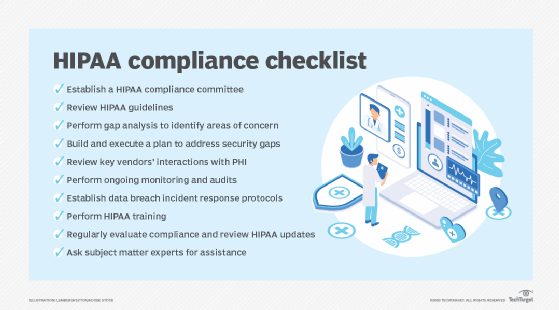
Main Content
HIPAA comprises five separate titles addressing issues from insurance portability to the privacy and security of health information:
[5kdqg8]
- Title I secures health insurance coverage for workers and their families during job changes or loss, protecting against denial for preexisting conditions. [5kdqg8]
- Titles III, IV, and V regulate aspects like pre-tax medical accounts, group health plans, and company-owned insurance policies. [5kdqg8]
The core concept of HIPAA lies in safeguarding PHI—any information that identifies an individual and relates to their health status, treatment, or payment for care.
[5kdqg8]
[9fgerv]
It does this through two pivotal rules:
- The HIPAA Privacy Rule sets limitations on how PHI can be used or disclosed, requiring patient consent except for specific exceptions (e.g., reporting gunshot injuries or communicable diseases). [5kdqg8]
- The HIPAA Security Rule establishes standards for securing electronic PHI (ePHI), insisting on access controls and data audit trails. [9fgerv]
Practical examples include:
- A hospital encrypting patient data and requiring staff login credentials to access records.
- A billing company securely transmitting claims without exposing patient identities.
- Patients requesting and receiving copies of their medical records.
For instance, when a patient moves to a new clinic, HIPAA mandates that the previous provider can only share medical history with explicit consent or under allowed exceptions, restricting data leaks.
[5kdqg8]
[df9ytx]
Another example is insurance companies using HIPAA-compliant systems to check eligibility or process claims without exposing personal details.
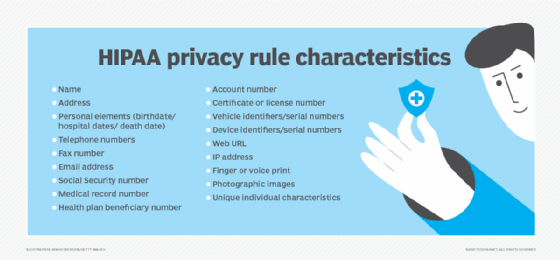
The benefits of HIPAA span:
- Protecting individuals from identity theft or fraud. [df9ytx]
- Enhancing patient trust in healthcare providers.
- Enabling efficient, standardized administrative processes.
However, organizations face challenges including the cost and complexity of compliance, the risk of substantial fines for violations, and maintaining security in increasingly digital infrastructures.
[9fgerv]
[5kdqg8]
[df9ytx]
Employee negligence is a leading cause of breaches, underlining the necessity of thorough staff training and robust security systems.
[5kdqg8]
Current State and Trends
HIPAA compliance is now fundamental for healthcare providers, insurers, IT vendors, and business associates. The market has responded with advanced encryption, cloud storage solutions, and training programs aimed at minimizing risks of PHI breaches.
[9fgerv]
[5kdqg8]
Key players include large hospital networks, insurance firms, and technology companies specializing in health IT security.
Recent developments include:
- The integration of the Health Information Technology for Economic and Clinical Health (HITECH) Act, strengthening breach notification requirements. [9fgerv]
- Increased enforcement activities and higher penalties for non-compliance.
- Emergence of AI-driven security tools and patient access apps that ensure HIPAA adherence, even as healthcare data volumes grow.

Future Outlook
As healthcare becomes ever more digital—with telemedicine, mobile apps, and cloud-based records—HIPAA standards are likely to evolve. Expected advancements include real-time data transparency, more sophisticated monitoring for breaches, automation in compliance reporting, and possible expansion of protections as technologies reshape care delivery. HIPAA’s ongoing relevance will be defined by its ability to balance patient privacy with seamless, modern healthcare experiences.
Conclusion
HIPAA remains a cornerstone of health data privacy and security in the U.S., promoting safe, efficient healthcare processes while protecting individuals’ personal information. Its evolution will likely mirror advances in technology, ensuring privacy remains at the forefront of healthcare innovation.
Citations
[9fgerv] 2025, Feb 13. What is the Purpose of HIPAA? Update 2025. Published: 2025-01-08 | Updated: 2025-02-13
[5kdqg8] 2025, Sep 15. Health Insurance Portability and Accountability Act (HIPAA ... - NCBI. Published: 2024-11-24 | Updated: 2025-09-15
[df9ytx] 2025, Oct 01. What is HIPAA? The Scope, Purpose and How to Comply - Safetica. Published: 2025-07-23 | Updated: 2025-10-01
[4]: 2025, Sep 28. Bricker & Eckler LLP: HIPAA Regulations: Definitions - Health Care. Updated: 2025-09-28
[5]: 2025, Oct 03. Summary of the HIPAA Privacy Rule - HHS.gov. Published: 2025-03-14 | Updated: 2025-10-03
[6]: 2025, Oct 03. HIPAA - Health Insurance Portability and Accountability Act - ASHA. Published: 2013-01-25 | Updated: 2025-10-03
[8]: 2025, Oct 02. Health Insurance Portability and Accountability Act (HIPAA) Home. Published: 2004-02-01 | Updated: 2025-10-02