


Atomic Design
Atomic Design
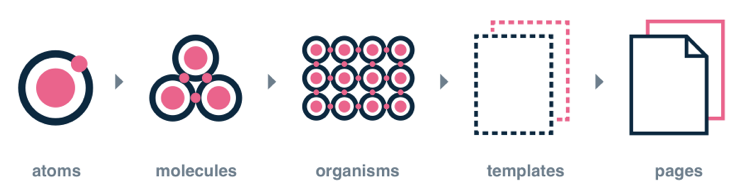
- Atomic Design is a foundational methodology and book by Brad Frost that breaks down UI design into reusable, hierarchical components inspired by chemistry, enabling scalable design systems.
- This is a book first published in 2016 by Brad Frost, a leading web designer and design systems advocate who introduced the concept in 2013.[1][2]
- Consultants return to it for its mental model of hierarchical composition—nesting small "atoms" into larger structures—which promotes consistency, reusability, and clear communication in team-based UI development.[1][3]
Type and Format
- Type: This source is a book (and its author).[1]
- Format details — publisher unknown from primary sources, year of first publication 2016, length approximately 250-300 pages based on standard design methodology books, notable as the canonical text on the methodology with digital companion resources.[1][2]
- Where it lives: Brad Frost's Atomic Design site — official companion site by the author. Google Books
The People Behind It
- Author: Brad Frost, a web designer, speaker, and consultant who popularized Atomic Design in 2013 through blog posts and his 2016 book; he emphasizes practical methodologies for scalable interfaces.[1][2][7]
- Prior works include early blog posts on pattern libraries and design systems, evolving into Atomic Design as his signature framework.[3]
- Current role: Independent consultant and author, frequently cited for insights on design tokens and modern evolutions of his methodology; maintains active presence via his personal site.[1][7]
Catalog of Notable Works
- Atoms: Basic elements like buttons, inputs, labels—smallest reusable building blocks that cannot be broken down further.[1][4]
- Molecules: Simple components combining atoms, such as a search form made from input and button—introduces functionality through grouping.[1][2]
- Organisms: Complex components combining molecules and atoms, like a navigation header—richer sections with multiple interactions.[1][3]
- Templates: Page-level wireframes showing layout structure without real content—focus on content arrangement.[1][4]
- Pages: Specific instances of templates filled with real content—final, production-ready views demonstrating the full system.[1][5]
- Hierarchical composition: Core thesis beyond labels—nest smaller components into larger ones for scalable, maintainable UIs.[1]
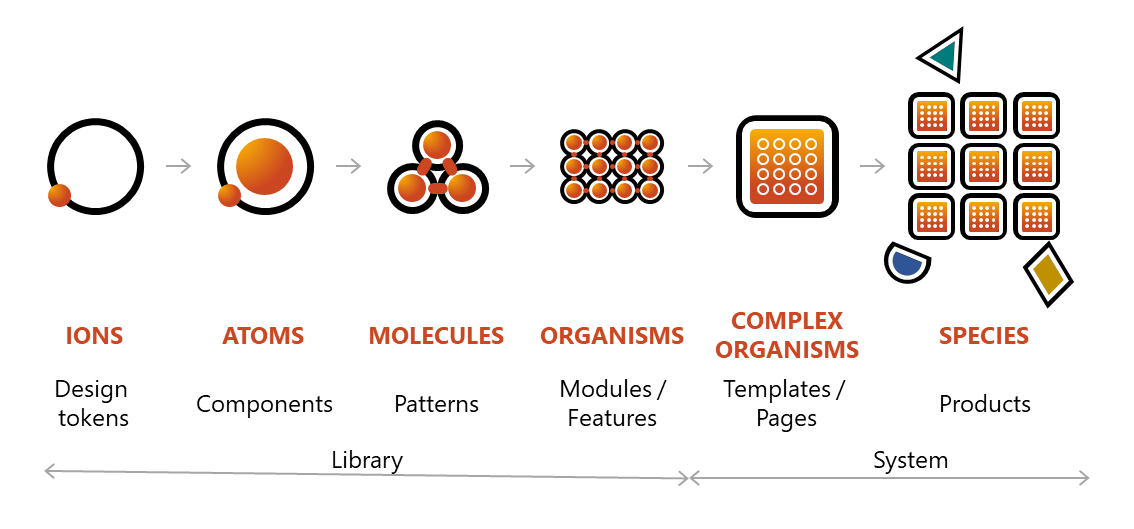
- Design tokens as sub-atoms: Modern addition for themeable systems, defining colors/spacing as global variables (e.g., color.primary.active).[1][7]
Why It Matters to Innovators
- Provides a chemistry-inspired mental model for breaking complex UIs into atoms/molecules/organisms/templates/pages, diagnosing scalability issues in design systems by revealing reuse gaps.[1][3]
- Teaches hierarchical composition as the enduring principle (not rigid labels), installing frameworks for consistent, themeable components via design tokens—critical for Design Systems.[1][7]
- Enables innovators to build production-ready interfaces with intention, reducing debates over categorization and fostering team communication in fast-iterating product environments.[1]
- Highlights evolution to 2025 relevance: flexible naming, AI automation, and tokens address original gaps, framing design systems as adaptive rather than dogmatic.[1]
- Counters oversimplification critiques by prioritizing flat hierarchies initially, evolving organically—illuminates modular innovation in front-end development.[6]
Best Starting Points
- Atomic Design official site — interactive overview of the five levels with visuals, ideal for quick mental model grasp.[1]
- What is Atomic Design? (Brad Frost intro) — 2013 origin post explaining core hierarchy, the most accessible entry.[1]
- Design Tokens + Atomic Design — author's update on modern foundations, bridging classic method to tokens.[7]
- Full book "Atomic Design" via Google Books — substantive dive into chapters and arguments for implementers.[1]
Adjacent Sources
- Brad Frost — author and primary thinker behind the methodology.
- Design Tokens — subatomic evolution emphasized by Frost himself.[7]
- Pattern Libraries — precursor concept to Atomic Design hierarchies.[3]
- Component Based Design — practical developer applications of the framework.[3]
- Design Systems — broader vault domain directly illuminated by this source's tags and thesis.[1]
Sources
[1]: Atomic Design Systems: Why the Labels Don't Matter - Qt
[2]: Atomic Design 101: Creating Structured Design Systems | Radiant
[3]: Atomic Design for Developers: Better Component Composition and ...
[4]: The beginners guide to Atomic Design - Justinmind
[5]: Design to Code: The Role of Atomic Design in Front-End Development
[6]: Iterating on Atomic Design - Sparkbox
[7]: Design Tokens + Atomic Design = ❤️ - Brad Frost