


Clean Architecture
Clean Architecture
Published on September 10, 2017.
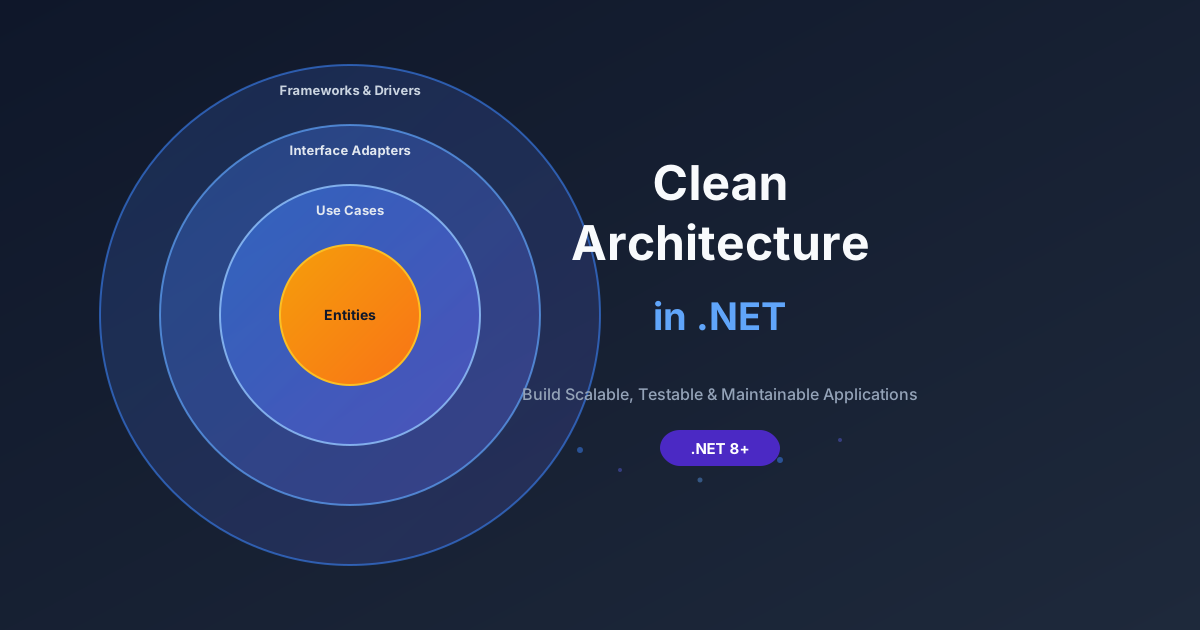
_Clean Architecture is Robert C. Martin's seminal 2017 book outlining a layered software design philosophy that prioritizes business rules at the core, insulating them from frameworks and externalities._
Robert C. Martin, known as Uncle Bob, first published it in 2017 through Prentice Hall; consultants return to it for its timeless dependency rule that ensures adaptable, testable codebases amid shifting tech stacks.
[jww0jj]
Type and Format
Format details: Published by Prentice Hall (Pearson), first edition 2017, approximately 432 pages, with no major revised editions noted in discussions of its core principles.
[jww0jj]
Where it lives: Google Books — canonical preview and purchase link for "Clean Architecture: A Craftsman's Guide to Software Structure and Design" by Robert C. Martin.
[jww0jj]
The People Behind It
- He authored prior foundational books like "Clean Code" (2008) and "The Clean Coder" (2011), establishing his authority on principled software engineering. [yp7efi]
Catalog of Notable Works
This section lists key chapters or major arguments from the book, as direct chapter titles are referenced indirectly through principles in implementations:
- Domain Layer — Houses enterprise-wide business rules in entities, forming the innermost testable core. [55bnvt]
- Rich vs. Anemic Domain Models — Entities capture high-level business rules flexibly, supporting both styles without architectural flaws. [y5k72s]
- Layers and Boundaries — Use-case layer depends on entities; infrastructure depends outward, inverting traditional database-centric designs. [y5k72s]
Why It Matters to Innovators
- Teaches the Dependency Inversion mental model via concentric layers, diagnosing overspecialization to vendor tech and illuminating resilient software innovation. [55bnvt] [y5k72s] [jww0jj]
- Frames business rules as the true center (
"The business rules are [at the core]"[y5k72s] ), helping innovators build adaptable systems that evolve with market shifts rather than tech hype. - Installs single-responsibility encapsulation in entities (
"Each entity should have one reason to change"[^4qjrkf]), fostering modular innovation akin to Domain Driven Design.
Best Starting Points
- The Clean Architecture (Uncle Bob's original blog post) — 2012 essay that seeds the book's Dependency Rule, ideal accessible intro before the full read. [jww0jj]
- Building Your First Use Case With Clean Architecture — Practical tutorial applying the book's layers to user registration, bridging theory to code. [55bnvt]
- — Video demo of book principles in a real template, for visual learners. [6ixreq]
Adjacent Sources
- Clean Code — Prior Uncle Bob book on code craftsmanship, foundational to Clean Architecture's entity principles. [yp7efi]
- Domain Driven Design — Eric Evans' work mapping to Clean Architecture's entities+value objects+services. [yp7efi]
- The Pragmatic Programmer — Complementary software best practices often paired in clean code discussions.
- Refactoring — Martin Fowler's guide to evolving codebases, cited alongside for dependency management.
- Domain-Driven Design — Core concept directly influencing the book's domain layer.