


Defining and Describing Protein Folding
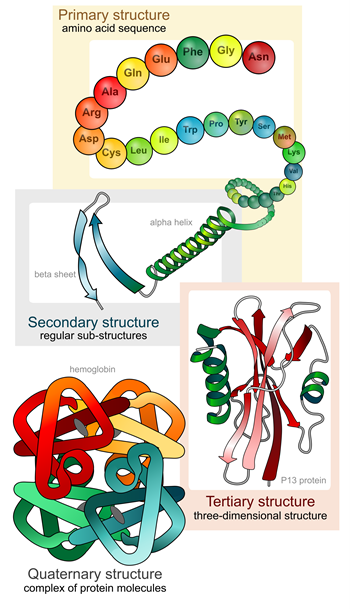
- The term applies both to the physical process by which a polypeptide adopts its three-dimensional structure and to computational methods that predict that structure from sequence data. [1] [3] It does not, by itself, mean drug discovery, protein engineering, or AI; those are downstream applications or enabling technologies. [1] [4] Innovation consultants care because better structure prediction can shorten experimental cycles, improve target selection, and open new business models in therapeutics, diagnostics, industrial biotechnology, and molecular design. [1] [3]
Disambiguation
Primary sense — the innovation-consulting sense
Other senses
1. Biological folding process
- The amino-acid sequence is the starting information, while the folded structure is a higher-order molecular state. [2]
- Misfolding or incorrect conformations can be relevant to disease biology and therapeutic research, making folding a potential mechanism-level entry point for innovation. [3]
- In this sense, “folding” describes what happens to the molecule, not a company’s product strategy or an AI model’s prediction. [2]
2. Computational structure prediction
- Newer systems increasingly model complexes involving proteins, DNA, RNA, and other biological molecules rather than only isolated protein chains. [1]
- “Prediction” is more precise than “folding” when describing software output, because the model generally estimates a structure rather than physically reproducing the molecule’s complete folding trajectory. [2]
Etymology and Origin
- The biological phrase emerged from structural biology and biochemistry, where researchers investigated how a linear amino-acid chain determines a protein’s native three-dimensional structure. [2]
- Christian Anfinsen’s work established the influential principle that the information required for a protein’s native structure is contained in its amino-acid sequence, a foundation later used in computational prediction. [2]
Adjacent Vocabulary
- Synonyms :
- Structural biology — the broader field studying molecular structures, including proteins and their complexes. [1]
- Antonyms :
- Protein unfolding — loss of a protein’s native or stable three-dimensional structure.
- Disordered state — a condition in which a protein region lacks one stable three-dimensional conformation.
-
- Adjacent terms :
- AI native biotech
- Protein engineering
- Generative design
- Experimental validation
-
Usage in Practice
- “Protein folding” is described as the problem of determining how a three-dimensional, or native, structure is determined from an amino-acid sequence. [2]
- AI-based methods are said to have evolved from “monomeric folding” toward “system-level modeling,” including molecular complexes and dynamics. [1]
- Structure prediction is presented as a way to “guide and accelerate experimental workflows,” a useful framing for teams deciding where computation should replace or prioritize laboratory work. [1]
- In drug discovery, predicted structures can improve target identification and virtual screening, connecting folding research directly to a therapeutics development funnel. [1]
- AlphaFold2 is characterized as having addressed a “long-standing challenge” in predicting a protein’s three-dimensional structure from its sequence. [4]
- Protein structure prediction is also framed as a way to search high-dimensional sequence space more efficiently for proteins with desired properties. [7]
Common Misuses
Sources
[1] 2026, Mar 09. pmc.ncbi.nlm.nih.gov . Protein structure prediction powered by artificial intelligence . Updated: 2026, Oct 03. Generated: 2026, Nov 07. Perplexity API response.
[2] 2026, Feb 19. link.springer.com . Synthesizing proteins on the graphics card: protein folding and the limits of critical AI studies - AI & SOCIETY . Updated: 2026, Nov 06. Generated: 2026, Nov 07. Perplexity API response.
[3] 2026, May 28. abcam.co.jp . Protein folding in research & therapy | Abcam - アブカム . Updated: 2026, Nov 01. Generated: 2026, Nov 07. Perplexity API response.
[4] 2026, Jun 01. pmc.ncbi.nlm.nih.gov . Protein Design Enters the Artificial Intelligence Era - PMC - NIH . Updated: 2026, Nov 04. Generated: 2026, Nov 07. Perplexity API response.
[5] 2026, May 08. nature.com . The latest AI breakthroughs in structural biology: protein ... . Updated: 2026, Oct 30. Generated: 2026, Nov 07. Perplexity API response.
[6] 2026, Apr 08. pmc.ncbi.nlm.nih.gov . pmc.ncbi.nlm.nih.gov › articles › PMC13068979Exploring quantum annealing for coarse-grained protein folding . Updated: 2026, Oct 19. Generated: 2026, Nov 07. Perplexity API response.
[7] 2026, Apr 13. science.org . How artificial intelligence is reengineering protein engineering . Updated: 2026, Apr 16. Generated: 2026, Nov 07. Perplexity API response.
[8] 2026, Sep 30. pmc.ncbi.nlm.nih.gov . DreamFold: A World Model to efficiently generate protein ... . Updated: 2026, Nov 04. Generated: 2026, Nov 07. Perplexity API response.
[9] 2026, Oct 15. nature.com . Artificial Intelligence Methodology in Structural Biology . Updated: 2026, Oct 31. Generated: 2026, Nov 07. Perplexity API response.
[10] 2026, Jan 30. pmc.ncbi.nlm.nih.gov . Artificial intelligence driven protein design and sustainable ... - PMC . Updated: 2026, Nov 07. Generated: 2026, Nov 07. Perplexity API response.